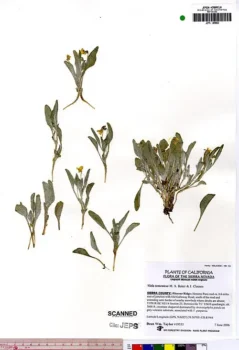
Feltleaf Violet: A Rare California Native Worth Growing Responsibly
If you’re looking to add a touch of California’s mountain wildflower magic to your garden, the feltleaf violet might just be the perfect choice. This charming little native has a story that’s both inspiring and cautionary – it’s a beautiful addition to the right garden, but one that needs our careful attention due to its vulnerable status in the wild.
What Makes Feltleaf Violet Special
Viola tomentosa, commonly known as feltleaf violet, is a California native perennial that earned its name from its distinctively fuzzy, heart-shaped leaves that feel soft to the touch – just like felt! This low-growing forb (that’s garden-speak for a non-woody flowering plant) produces lovely purple-blue flowers that are quintessentially violet-like, complete with their characteristic face-like appearance that seems to peek up at you from the garden floor.
Where You’ll Find It in the Wild
This special violet calls California home, specifically the mountainous regions of the Sierra Nevada and northern parts of the state. It’s what botanists call an endemic species – meaning it exists nowhere else on Earth except in this specific region. Talk about California dreaming!
- Species observed
- No observations
A Word of Caution: Rarity Status
Here’s where things get serious for a moment. Feltleaf violet has a Global Conservation Status of S3, which means it’s considered vulnerable. In plain English, this means the plant is either very rare throughout its range or found only in restricted areas, making it vulnerable to disappearing altogether. With typically only 21 to 100 occurrences or between 3,000 and 10,000 individuals remaining, this isn’t a plant to take lightly.
Important: If you’re inspired to grow feltleaf violet, please only source it from reputable native plant nurseries that grow their stock from ethically collected seeds or cuttings. Never dig plants from the wild – this could contribute to its decline.
Why Grow Feltleaf Violet?
Despite its rarity (or perhaps because of it), there are compelling reasons to consider this native violet for your garden:
- Pollinator magnet: Small native bees and other pollinators love the nectar-rich flowers
- Butterfly host: Serves as a host plant for fritillary butterflies, supporting their complete life cycle
- Unique texture: Those fuzzy leaves add interesting tactile contrast to your garden
- Conservation contribution: Growing it responsibly helps preserve genetic diversity
- True California native: Perfect for authentic regional landscaping
Garden Design Ideas
Feltleaf violet works beautifully as a groundcover in several garden settings:
- Woodland gardens: Pairs perfectly with ferns and other shade-loving California natives
- Rock gardens: Tucks nicely between stones in partially shaded areas
- Native plant gardens: An authentic choice for California native landscaping
- Shade borders: Creates a soft, textural carpet under trees and shrubs
Growing Conditions and Care
Feltleaf violet appreciates conditions that mimic its mountain home:
- Light: Partial to full shade – think dappled sunlight under trees
- Soil: Well-draining soil that doesn’t get waterlogged
- Water: Moderate moisture during the growing season, but can handle some summer dormancy
- Climate: Hardy in USDA zones 5-8, perfect for California’s varied elevations
Planting and Care Tips
Getting your feltleaf violet established is pretty straightforward once you understand its preferences:
- Plant in fall or early spring when temperatures are moderate
- Provide consistent moisture during the active growing season
- Apply a light mulch to help retain soil moisture and suppress weeds
- Don’t panic if it goes dormant during hot summer weather – this is natural
- Avoid overwatering, especially in heavy soils
- Give it space to spread naturally as a groundcover
The Bottom Line
Feltleaf violet represents both an opportunity and a responsibility. It’s a chance to grow something truly special – a plant that exists nowhere else in the world except California’s mountains. But it’s also a reminder that our native flora needs our protection and thoughtful stewardship.
If you choose to grow Viola tomentosa, you’re not just adding a beautiful groundcover to your garden; you’re becoming part of a conservation effort. Just remember: source responsibly, grow with care, and maybe even share seeds with other conservation-minded gardeners. Your mountain meadow-inspired corner of the garden will thank you, and so will the pollinators and butterflies that call it home.