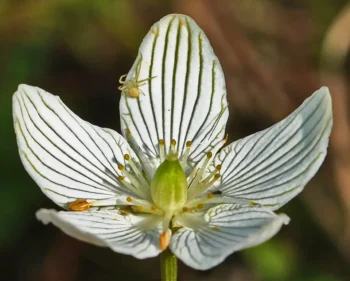
Fen Grass of Parnassus: A Delicate Wetland Beauty for Specialized Gardens
If you’ve ever wandered through a northern bog or fen and spotted a small white flower that looks like it belongs in a fairy tale, you’ve likely encountered fen grass of Parnassus (Parnassia glauca). Don’t let the name fool you – this charming little plant isn’t actually a grass at all! It’s a delicate perennial forb that brings an understated elegance to wetland gardens.
What Makes Fen Grass of Parnassus Special?
Fen grass of Parnassus is a true native gem, naturally occurring across a wide swath of North America. You’ll find this beauty growing wild in Manitoba, New Brunswick, Ontario, Quebec, Saskatchewan, and throughout much of the northeastern and north-central United States, including Connecticut, Illinois, Indiana, Iowa, Maine, Massachusetts, Michigan, Minnesota, New Hampshire, New Jersey, New York, North Dakota, Ohio, Pennsylvania, Rhode Island, South Dakota, Vermont, Wisconsin, and Newfoundland.
- Species observed
- No observations
This hardy perennial (thriving in USDA zones 2-7) showcases kidney-shaped basal leaves that form neat little rosettes close to the ground. But the real showstopper comes in late summer when delicate white flowers appear on slender stems. Each flower features five pristine white petals adorned with subtle green veining that gives them an almost translucent quality.
Is This Plant Right for Your Garden?
Here’s where things get interesting – and a bit challenging. Fen grass of Parnassus is classified as an obligate wetland plant across all regions where it grows. This means it almost always occurs in wetlands and has very specific growing requirements that can be tricky to replicate in typical garden settings.
Perfect for:
- Bog gardens and constructed wetlands
- Rain gardens in consistently wet areas
- Native plant restoration projects
- Naturalized wetland edges
- Specialized water gardens
Not ideal for:
- Traditional flower borders
- Dry or well-drained soils
- Low-maintenance garden areas
- Beginning gardeners
Growing Fen Grass of Parnassus Successfully
If you’re up for the challenge and have the right conditions, growing fen grass of Parnassus can be incredibly rewarding. This plant requires consistently moist to wet soil – think bog-like conditions rather than just moist garden soil.
Key Growing Requirements:
- Light: Full sun to partial shade
- Soil: Constantly wet, preferably alkaline conditions
- Water: Consistent moisture is absolutely critical
- pH: Slightly alkaline soils preferred
- Drainage: Poor drainage is actually preferred!
Wildlife and Pollinator Benefits
While small in stature, fen grass of Parnassus pulls its weight in supporting local ecosystems. The flowers attract various small pollinators, including flies, small bees, and other beneficial insects. The timing of its late-summer blooms makes it particularly valuable when many other wetland flowers have finished for the season.
Planting and Care Tips
Successfully establishing fen grass of Parnassus requires patience and the right setup:
- Start with plants from reputable native plant nurseries rather than attempting to grow from seed
- Plant in spring when soil is naturally saturated
- Ensure the planting area never dries out – consider installing irrigation if natural moisture isn’t reliable
- Mulch lightly with organic matter to help retain moisture
- Be patient – this plant may take time to establish and typically doesn’t spread aggressively
The Bottom Line
Fen grass of Parnassus is undeniably beautiful and ecologically valuable, but it’s definitely a specialist plant for specialist gardens. If you have a bog garden, constructed wetland, or consistently wet area that needs a delicate native touch, this could be your perfect plant. However, if you’re looking for something more adaptable for typical garden conditions, you might want to consider other native wetland plants that are a bit more forgiving.
For gardeners committed to authentic native wetland gardening, fen grass of Parnassus offers a unique opportunity to grow something truly special – a plant that connects your garden directly to the wild, wonderful world of North American fens and bogs.