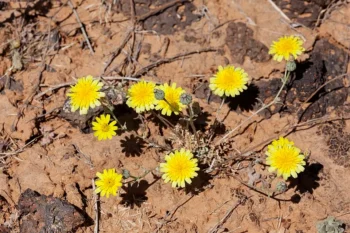
Fendler’s Desertdandelion: A Charming Native Wildflower for Water-Wise Gardens
If you’re looking for a delightful native wildflower that thrives with minimal fuss in hot, dry climates, let me introduce you to Fendler’s desertdandelion (Malacothrix fendleri). This charming little annual might not win any awards for size, but it more than makes up for it with its sunny disposition and remarkable ability to flourish where other plants fear to tread.
Meet This Southwestern Native
Fendler’s desertdandelion is a true child of the American Southwest, calling Arizona, New Mexico, and Texas home. As a native species to the lower 48 states, this hardy little forb has spent centuries adapting to the challenging conditions of desert and semi-desert regions. Unlike its weedy dandelion cousins that pop up in lawns everywhere, this native beauty belongs exactly where you plant it.
- Species observed
- No observations
What Makes It Special
This annual forb grows as a low rosette of leaves close to the ground, sending up delicate stems topped with bright yellow, daisy-like flowers. The blooms are small but numerous, creating a cheerful carpet of color that seems to glow against the often stark desert landscape. As an annual, Fendler’s desertdandelion completes its entire life cycle in one growing season, but don’t let that discourage you – it’s quite good at reseeding itself when conditions are right.
Perfect for Water-Wise Landscapes
If you’re gardening in USDA hardiness zones 8-10 and embracing xeriscaping or water-wise gardening, Fendler’s desertdandelion deserves a spot in your landscape. It’s particularly well-suited for:
- Desert and drought-tolerant gardens
- Rock gardens and gravelly areas
- Wildflower meadows and naturalized spaces
- Ground cover in challenging, dry locations
- Native plant gardens focused on regional flora
Pollinator Paradise in Miniature
Don’t let the small size fool you – those bright yellow composite flowers are pollinator magnets. Native bees, butterflies, and other beneficial insects absolutely love them. The flowers provide nectar and pollen when many other plants are struggling with heat and drought, making Fendler’s desertdandelion an important resource for local wildlife.
Growing Conditions Made Simple
One of the best things about Fendler’s desertdandelion is how undemanding it is. This plant has mastered the art of thriving with very little:
- Sunlight: Full sun is essential – this plant loves basking in intense southwestern sunshine
- Soil: Well-draining sandy or rocky soils are perfect; it actually prefers poor soils over rich ones
- Water: Extremely drought tolerant once established; minimal watering required
- Maintenance: Practically none – this is a plant it and forget it kind of wildflower
Planting and Care Tips
Growing Fendler’s desertdandelion is refreshingly straightforward:
- When to plant: Direct seed in fall for spring blooms, timing with natural rainfall patterns
- Seeding: Scatter seeds directly where you want them to grow – they don’t transplant well
- Watering: Water lightly after seeding, then rely on natural rainfall
- Fertilizing: Skip it entirely – rich soils can actually harm this desert-adapted plant
- Ongoing care: Let it do its thing! Allow plants to set seed for next year’s display
Why Choose Fendler’s Desertdandelion?
This native wildflower offers several compelling reasons to include it in your landscape. It’s perfectly adapted to challenging southwestern growing conditions, requires virtually no maintenance once established, and provides valuable resources for native pollinators. Plus, there’s something deeply satisfying about growing a plant that truly belongs in your local ecosystem.
While Fendler’s desertdandelion might not create the dramatic impact of larger native plants, it fills an important niche as a reliable, low-maintenance ground cover that brings life and color to tough spots in your garden. For water-wise gardeners in the Southwest, it’s a small investment that pays big dividends in both beauty and ecological value.