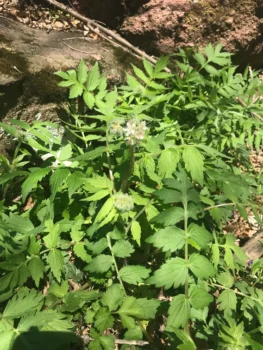
Fendler’s Waterleaf: A Hidden Gem for Your Shade Garden
If you’re looking for a charming native groundcover that thrives in those tricky shaded spots, let me introduce you to Fendler’s waterleaf (Hydrophyllum fendleri). This delightful perennial might not be the flashiest plant in the garden center, but it’s exactly the kind of understated beauty that makes woodland gardens truly special.
Meet This Native Wonder
Fendler’s waterleaf is a true native of western North America, naturally found across an impressive range that includes British Columbia, California, Colorado, Idaho, New Mexico, Oregon, Utah, Washington, and Wyoming. As a perennial forb – that’s garden-speak for a non-woody flowering plant – it comes back year after year to grace your garden with its quiet charm.
- Species observed
- No observations
What Makes It Special?
This little beauty offers several compelling reasons to earn a spot in your garden:
- Delicate, bell-shaped flowers in white to pale purple that appear in charming clusters
- Distinctive palmate leaves with 5-7 deeply divided lobes that create lovely texture
- Excellent groundcover that naturally spreads to fill in woodland areas
- Attracts native bees, butterflies, and other beneficial pollinators
- Completely hardy in USDA zones 3-8
Perfect for Woodland Gardens
Fendler’s waterleaf is tailor-made for shade and woodland gardens where it can naturalize beautifully. It’s particularly wonderful for:
- Native plant landscapes that celebrate regional flora
- Shaded borders that need reliable groundcover
- Naturalizing areas where you want a wild look
- Pollinator gardens in partial shade
Growing Conditions and Care
Here’s where Fendler’s waterleaf really shines – it’s refreshingly easy to please! This adaptable native thrives in partial to full shade and prefers moist, well-drained soils rich in organic matter. Think of the conditions you’d find on a forest floor, and you’re on the right track.
Interestingly, this plant has a Facultative wetland status in most regions, meaning it’s happy in both wetland and non-wetland conditions. In the Great Plains, it leans more toward Facultative Wetland, preferring slightly wetter conditions. This flexibility makes it incredibly versatile for different garden situations.
Planting and Care Tips
Getting started with Fendler’s waterleaf is straightforward:
- Plant in spring when the soil is workable
- Choose a spot with partial to full shade
- Ensure soil stays consistently moist but not waterlogged
- Apply a layer of organic mulch to retain moisture and suppress weeds
- Once established, it’s remarkably low-maintenance
Supporting Native Wildlife
By choosing Fendler’s waterleaf, you’re not just adding beauty to your garden – you’re creating habitat for native wildlife. The flowers provide nectar for various pollinators, while the plant itself supports the complex web of native insects and other creatures that depend on indigenous plants.
The Bottom Line
Fendler’s waterleaf might not demand attention like a showy rose or dramatic hosta, but that’s exactly its charm. It’s the kind of plant that quietly does its job, providing reliable beauty, supporting local wildlife, and asking for very little in return. For gardeners who appreciate native plants and love the subtle elegance of woodland gardens, this little gem deserves serious consideration.
Plus, there’s something deeply satisfying about growing a plant that truly belongs in your region – one that has been thriving in your local ecosystem for thousands of years. Now that’s what I call gardening with purpose!