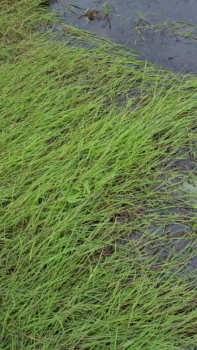
Fernald’s False Mannagrass: A Rare Native Gem for Wetland Gardens
If you’re looking to create an authentic wetland garden or restore a marshy area on your property, you might want to get acquainted with Fernald’s false mannagrass (Torreyochloa pallida var. fernaldii). This delicate native grass might not win any beauty contests, but it’s a true specialist that plays an important role in North America’s wetland ecosystems.
What Makes This Grass Special?
Fernald’s false mannagrass is a perennial graminoid – that’s botanist-speak for a grass-like plant. Don’t let the humble appearance fool you; this fine-textured grass has been quietly doing its job in wetlands across North America for centuries. With its narrow leaves and delicate, airy flower panicles, it adds a subtle, naturalistic touch to water gardens and boggy areas.
Where Does It Call Home?
This grass is a true North American native, found across an impressive range that spans from coast to coast. You’ll find it growing naturally in states from Maine down to Tennessee and as far west as Wyoming and British Columbia. It thrives in provinces like Ontario, Quebec, and the Maritime provinces, plus states throughout New England, the Great Lakes region, and scattered locations in between.
- Species observed
- No observations
A Word of Caution: Rarity Matters
Here’s where things get serious – Fernald’s false mannagrass is considered rare in some areas. In New Jersey, for example, it holds an S1 rarity status and is listed as a Highlands species of concern. This means if you’re lucky enough to find it available, make absolutely sure you’re getting it from a responsible, ethical source that doesn’t collect from wild populations.
Should You Grow It?
The honest answer? Only if you have the right conditions and a specific need for wetland plants. This isn’t your typical garden grass – it’s a specialist that demands consistently wet conditions. Here’s when it makes sense to consider:
- You’re restoring or creating a wetland area
- You have a bog garden or rain garden project
- You want to support native plant diversity in appropriate habitats
- You’re working on erosion control near water features
Growing Fernald’s False Mannagrass Successfully
If you decide this specialized grass fits your landscape goals, here’s what you need to know:
Growing Conditions: This grass is all about the water. It needs consistently moist to wet soil – think marshy conditions rather than just moist. It can handle full sun to partial shade, making it fairly flexible on light requirements as long as the moisture is right.
Climate Requirements: Hardy in USDA zones 3-7, this grass can handle cold winters but may struggle in hot, dry southern climates.
Planting Tips: Spring is your best bet for establishing new plants. If you can source seeds, they can be direct-sown in prepared wet areas. Division of existing clumps works well too, but remember – only from ethically sourced plants!
Maintenance: The good news? Once established in the right conditions, this grass is fairly low-maintenance. Just ensure it never dries out, and it should take care of itself.
Garden Design Role
Fernald’s false mannagrass isn’t going to be your showstopper plant, and that’s perfectly fine. Think of it as a supporting actor in your wetland drama. It provides fine texture contrast against broader-leaved wetland plants, helps with erosion control, and creates that authentic wild marsh look that’s impossible to fake with non-native alternatives.
Wildlife and Ecosystem Value
While this grass is wind-pollinated (so it won’t attract butterflies like a wildflower), it still provides valuable ecosystem services. Native grasses like this one offer nesting material for birds, habitat for small creatures, and help maintain the complex relationships that make wetland ecosystems function properly.
The Bottom Line
Fernald’s false mannagrass is definitely not for every gardener or every garden. But if you’re passionate about native plants, working with wetland restoration, or creating authentic habitat gardens, it’s worth seeking out – just make sure you do so responsibly. Its rarity makes it even more precious, so if you do grow it, you’ll be helping preserve a piece of North America’s natural heritage right in your own backyard.
Remember, specialized native plants like this one are often the unsung heroes of ecosystem restoration. They might not grab Instagram likes, but they’re doing the important work of supporting biodiversity and maintaining the intricate web of relationships that keep our natural systems healthy.