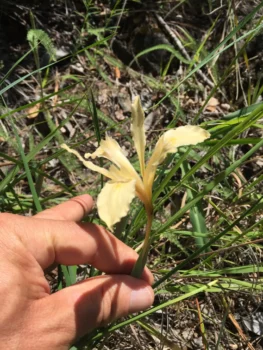
Fernald’s Iris: A Mysterious California Native
If you’ve stumbled across the name Fernald’s iris (Iris fernaldii) in your search for California native plants, you’ve encountered one of the more enigmatic members of the iris family. This perennial forb has captured the attention of botanists and native plant enthusiasts alike, though finding concrete information about it proves to be quite the challenge.
What We Know About Fernald’s Iris
Fernald’s iris is classified as a perennial forb, meaning it’s an herbaceous plant that returns year after year without developing woody stems. Like other iris species, it lacks the woody tissue that characterizes shrubs and trees, instead maintaining its life cycle through underground structures that survive seasonal changes.
This species is native to the lower 48 states, with its documented range limited to California. However, the specifics of where exactly in California you might encounter this iris remain largely undocumented in readily available botanical resources.
- Species observed
- No observations
The Mystery of Rarity
One of the most intriguing aspects of Fernald’s iris is its conservation status, listed as S3? – a designation that essentially means undefined. This uncertain status suggests that botanists and conservationists don’t have enough reliable data to properly assess the plant’s population size, distribution, or conservation needs. This could indicate that the species is:
- Extremely rare or localized
- Possibly confused with other iris species in the field
- In need of further taxonomic study
- Historically documented but currently difficult to locate
Should You Grow Fernald’s Iris?
Here’s where things get complicated for the eager native plant gardener. Given the unclear conservation status and limited available information, we’d strongly recommend proceeding with extreme caution if you encounter this plant for sale or in the wild.
If Fernald’s iris is indeed a rare species, any plant material should only be obtained from responsible, conservation-minded sources that can verify the plant’s origin and ensure that wild populations aren’t being depleted. Never collect plants from wild populations, especially when dealing with potentially rare species.
Alternative California Native Irises
While we unravel the mystery of Fernald’s iris, California offers plenty of well-documented, readily available native iris options for your garden:
- Pacific Coast Iris (Iris douglasiana)
- Yellow-leaved Iris (Iris chrysophylla)
- Hartweg’s Iris (Iris hartwegii)
- Bowltube Iris (Iris macrosiphon)
These alternatives offer the beauty and ecological benefits of native irises while being better understood in terms of their growing requirements and conservation status.
Growing Conditions and Care
Unfortunately, specific growing requirements for Fernald’s iris remain undocumented. However, most California native irises generally prefer:
- Well-draining soil
- Mediterranean climate conditions
- Some summer drought tolerance once established
- Partial shade to full sun exposure
If you do encounter this species, observing its natural habitat would provide the best clues for successful cultivation.
The Bottom Line
Fernald’s iris represents one of those fascinating botanical puzzles that remind us how much we still have to learn about our native flora. While its mysterious nature might make it appealing to collectors, the responsible approach is to focus on well-documented native alternatives until we have better information about this species’ status and needs.
For now, Fernald’s iris remains more of a botanical curiosity than a practical garden choice. But who knows? Future research might reveal this enigmatic iris to be a hidden gem of California’s native plant palette.