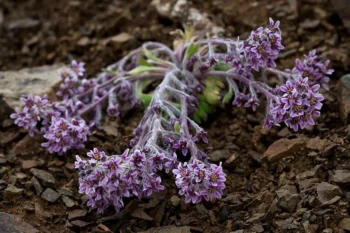
Fernleaf False Candytuft: A Rare Arctic Gem for Specialized Gardens
If you’re passionate about rare native plants and have the right growing conditions, fernleaf false candytuft (Smelowskia media) might just be the unique addition your garden needs. This delicate perennial forb brings a touch of the Arctic wilderness to specialized cold-climate gardens, though it’s definitely not a plant for everyone or every garden.
What Makes This Plant Special
Fernleaf false candytuft is a charming little perennial that truly lives up to its common name. Its finely divided, fernlike foliage creates an elegant backdrop for clusters of small white flowers that bloom in the brief Arctic summer. As a native forb, it’s an herbaceous plant without woody stems, making it quite different from the shrubs and trees that dominate many northern landscapes.
Where It Calls Home
This hardy little plant is native to some of North America’s most challenging climates, naturally occurring in Alaska, Yukon, and the Northwest Territories. It’s perfectly adapted to life in the far north, where it thrives in the brief growing seasons and harsh winters that would spell doom for most garden plants.
- Species observed
- No observations
Important Rarity Considerations
Before we dive into growing tips, there’s something crucial you need to know: fernleaf false candytuft has a Global Conservation Status of S5T2T3, indicating it has limited distribution and may be vulnerable in parts of its range. If you’re interested in growing this plant, please only obtain it from responsible sources that don’t impact wild populations. Consider contacting botanical gardens, specialized native plant societies, or conservation organizations that work with rare Arctic plants.
Garden Role and Design Uses
This isn’t your typical border perennial! Fernleaf false candytuft shines in very specific garden settings:
- Rock gardens that mimic alpine conditions
- Specialized cold-climate native plant collections
- Arctic or subarctic demonstration gardens
- Containers for plant enthusiasts in extremely cold regions
Its delicate texture and small stature make it perfect for close-up viewing, where visitors can appreciate its intricate foliage and dainty flower clusters.
Growing Conditions: Not for the Faint of Heart
Here’s where things get challenging – this plant has very specific needs that limit where it can successfully grow:
- Climate: USDA Hardiness Zones 1-4 (extremely cold climates only)
- Soil: Excellent drainage is absolutely critical; rocky or gravelly soils preferred
- Sunlight: Full sun exposure
- Water: Minimal summer watering; prefers dry conditions during growing season
- Temperature: Requires genuine cold winters and cool summers
Planting and Care Tips
If you’re in the right climate zone and ready for a challenge, here’s how to give this Arctic beauty its best chance:
- Plant in spring after the last frost, though in its native range, this might be quite late in the season
- Ensure drainage is perfect – consider raised beds or rock gardens with lots of gravel
- Water very sparingly once established; overwatering is likely to be fatal
- No fertilization needed; these plants are adapted to nutrient-poor soils
- Mulch with gravel or small rocks rather than organic materials
- Seeds require cold stratification if you’re attempting propagation
Wildlife and Pollinator Value
While small, the white flower clusters do attract specialized cold-climate pollinators, including small flies and hardy bees that are active in Arctic conditions. In its native habitat, it’s part of the complex ecosystem that supports Arctic wildlife, though in garden settings, its wildlife value may be more limited.
Is This Plant Right for You?
Fernleaf false candytuft is definitely a plant for specialists rather than general gardeners. Consider growing it if you:
- Live in USDA zones 1-4 with genuinely cold winters
- Have excellent drainage capabilities in your garden
- Enjoy collecting rare and challenging plants
- Want to support conservation through responsible cultivation
- Have experience with alpine or Arctic plants
However, skip this one if you live in warmer climates, have heavy clay soil, or prefer low-maintenance plants. For most gardeners, there are many other native options that will be more successful and easier to grow.
Remember, if you do decide to grow this rare Arctic gem, always source it responsibly and consider it a privilege to help preserve this unique piece of North America’s botanical heritage in cultivation.