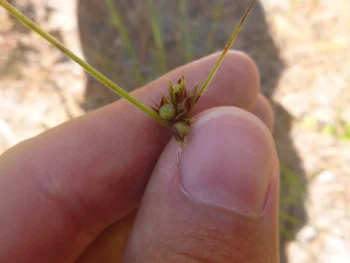
Fewflower Nutrush: A Humble Native Sedge with Big Potential
Meet the fewflower nutrush (Scleria pauciflora), a modest little native sedge that might not win any beauty contests but certainly deserves a spot in your naturalized garden. This unassuming perennial grass-like plant is one of those quiet garden workhorses that does its job without demanding much attention—and sometimes, that’s exactly what you need.
What Makes Fewflower Nutrush Special?
As a true North American native, fewflower nutrush has been quietly holding down the fort in our ecosystems for centuries. This hardy perennial belongs to the sedge family (Cyperaceae), making it a grass-like plant that’s actually more closely related to your garden sedges than to lawn grass. Don’t let its simple appearance fool you—this little plant is surprisingly adaptable and resilient.
Where Does It Call Home?
Fewflower nutrush has quite the extensive natural range across North America. You’ll find this adaptable native growing wild from southeastern Canada all the way down to Florida, and stretching west through the Great Plains to Texas. It’s naturally present in an impressive list of states including Alabama, Arkansas, Connecticut, Delaware, Florida, Georgia, Illinois, Indiana, Kansas, Kentucky, Louisiana, Maryland, Massachusetts, Michigan, Mississippi, Missouri, New Hampshire, New Jersey, New York, North Carolina, Ohio, Oklahoma, Pennsylvania, Rhode Island, South Carolina, Tennessee, Texas, Virginia, and West Virginia, plus Ontario, Canada.
- Species observed
- No observations
The Goldilocks of Moisture Preferences
Here’s where fewflower nutrush gets really interesting—it’s remarkably flexible about water. Depending on your region, this plant can handle different moisture conditions:
- In coastal areas, it’s comfortable in both wet and dry spots
- In the Caribbean region, it leans toward wetland conditions but can adapt to drier sites
- In mountainous and piedmont areas, it prefers drier ground but can tolerate some wetness
- In the Great Plains, it’s back to preferring wetter conditions
- In the Midwest and Northeast, it generally likes things on the drier side
This adaptability makes it a fantastic choice for gardeners dealing with variable moisture conditions or transitional areas between wet and dry zones.
Growing Fewflower Nutrush Successfully
The beauty of fewflower nutrush lies in its simplicity. This low-maintenance native thrives in USDA hardiness zones 4 through 9, making it suitable for most of the continental United States. It’s equally happy in partial shade or full sun, and it’s not particularly fussy about soil type, though it does best in acidic to neutral conditions.
For planting and care, keep these tips in mind:
- Plant seeds or divisions in spring for best establishment
- Once established, it requires minimal care and can spread naturally via rhizomes
- It’s drought-tolerant once mature but appreciates consistent moisture during its first growing season
- No fertilization needed—as a native, it’s adapted to local soil conditions
Where Does It Fit in Your Landscape?
While fewflower nutrush won’t be the star of your flower border, it excels as a supporting player in naturalized landscapes. Consider it for:
- Rain gardens where its moisture adaptability shines
- Woodland gardens as understory ground cover
- Slope stabilization and erosion control projects
- Wetland restoration areas
- Natural meadow plantings where you want authentic regional flora
Should You Plant Fewflower Nutrush?
If you’re creating a naturalized landscape, restoring native habitat, or need a low-maintenance ground cover for challenging spots, fewflower nutrush is definitely worth considering. It may not have showy flowers or dramatic foliage, but it offers something equally valuable: authenticity, adaptability, and the satisfaction of growing a plant that truly belongs in your local ecosystem.
While it’s primarily wind-pollinated and won’t attract butterflies like more showy natives, the seeds it produces can provide food for small birds, adding to your garden’s ecological value. Plus, there’s something deeply satisfying about growing a plant that was likely growing in your area long before European settlement.
For gardeners seeking drama and bold color, this probably isn’t your plant. But for those who appreciate subtle beauty and want to support local ecosystems while requiring minimal garden maintenance, fewflower nutrush might just be the perfect humble hero your landscape needs.