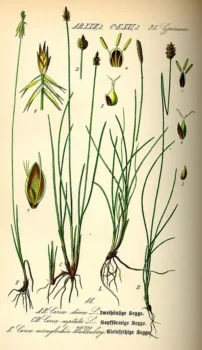
Fewseeded Bog Sedge: A Hardy Wetland Native for Specialized Gardens
If you’re looking to create an authentic wetland garden or restore a boggy area on your property, the fewseeded bog sedge (Carex microglochin) might just be the unsung hero you need. This humble little sedge may not win any beauty contests, but it’s a true champion when it comes to thriving in wet, challenging conditions where many other plants would simply give up.
What Is Fewseeded Bog Sedge?
Fewseeded bog sedge is a perennial grass-like plant that belongs to the sedge family (Cyperaceae). Don’t let the grass-like description fool you into thinking it’s just another lawn alternative – this specialized plant has evolved to excel in wetland environments that would drown your typical garden plants. As its name suggests, it produces relatively few seeds compared to other sedges, but what it lacks in reproductive abundance, it makes up for in resilience.
Where Does It Call Home?
This hardy sedge is truly a North American native success story. You’ll find it naturally occurring across an impressive range that includes Alaska, much of Canada (Alberta, British Columbia, Manitoba, Ontario, Quebec, Yukon, Northwest Territories, Nunavut, Labrador, and Newfoundland), and several U.S. states including Colorado, Maine, Montana, New Mexico, Utah, and Wyoming. Its circumpolar distribution extends even to Greenland, making it one tough customer when it comes to cold tolerance.
- Species observed
- No observations
Why Consider This Wetland Wonder?
Here’s where fewseeded bog sedge really shines – it’s absolutely committed to wet environments. This plant is classified as an Obligate Wetland species in most regions, meaning it almost always occurs in wetlands. In the Western Mountains, Valleys, and Coast region, it’s considered Facultative Wetland, which means it usually prefers wet conditions but can occasionally tolerate drier spots.
If you have a consistently soggy area in your yard that nothing else seems to want to call home, this sedge might be your solution. It’s particularly valuable for:
- Bog gardens and naturalistic wetland plantings
- Rain gardens that need plants for the wettest zones
- Restoration projects in degraded wetland areas
- Alpine or northern-climate specialized gardens
What to Expect Aesthetically
Let’s be honest – fewseeded bog sedge isn’t going to be the showstopper in your garden. This is a plant you choose for function rather than flashy flowers or dramatic foliage. It produces fine, grass-like leaves and small, inconspicuous flower heads that are wind-pollinated rather than designed to attract pollinators. Think of it as the quiet, dependable friend in your plant community rather than the party animal.
Growing Conditions and Care
The beauty of this sedge lies in its simplicity – if you can provide the right conditions, it’s remarkably low-maintenance:
- Moisture: Consistently wet to moist soil is essential
- Soil: Prefers acidic conditions typical of bog environments
- Light: Full sun to partial shade
- Climate: Extremely cold-hardy (USDA zones 2-7)
- Maintenance: Very low once established in proper conditions
Planting and Care Tips
Success with fewseeded bog sedge is all about location, location, location:
- Plant in areas that stay consistently moist or wet throughout the growing season
- If your natural soil isn’t acidic enough, consider amending with peat moss or sulfur
- This sedge spreads slowly, so be patient with establishment
- Once established, it requires minimal care – just ensure it doesn’t dry out
- Seed propagation can be challenging; division of established clumps is often more successful
Is This Sedge Right for Your Garden?
Fewseeded bog sedge is definitely a specialist plant for specific situations. Consider it if you:
- Have naturally wet or boggy areas you want to revegetate with natives
- Are creating a rain garden or bioswale
- Live in a cold climate (zones 2-7) and need hardy wetland plants
- Value ecological function over ornamental appeal
- Are working on wetland restoration projects
However, skip this sedge if you:
- Want a showy, ornamental plant for regular garden beds
- Have only dry or well-drained planting areas
- Live in a warm climate (zone 8 and higher)
- Prefer fast-growing, quickly establishing plants
While fewseeded bog sedge might not be the star of your garden show, it’s an invaluable supporting player in the right setting. For gardeners committed to native plants and ecological restoration, this humble sedge offers authentic character and unwavering reliability in challenging wet conditions. Sometimes the most important plants are the ones that do their job quietly, helping to create healthy, functioning ecosystems one soggy spot at a time.