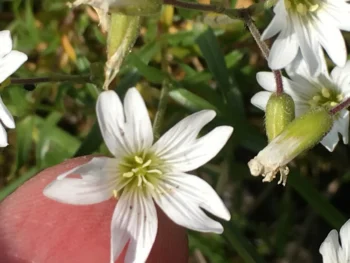
Field Chickweed: A Hardy Ground Cover for Northern Gardens
If you’re looking for a tough, no-fuss ground cover that can handle whatever Mother Nature throws at it, field chickweed (Cerastium arvense) might just be your new gardening buddy. This unassuming little perennial has been quietly carpeting landscapes across the northern regions for centuries, and it’s about time more gardeners discovered its charms.
What Exactly Is Field Chickweed?
Field chickweed is a low-growing perennial forb that belongs to the carnation family. Unlike its more aggressive cousin, common chickweed, this species is a well-behaved ground cover that forms neat mats rather than taking over your entire garden. It’s the kind of plant that works hard without demanding much attention – a true garden workhorse.
Where Does It Call Home?
This hardy little plant has quite the impressive range. Field chickweed is native to Alaska, Canada, Greenland, and St. Pierre and Miquelon. Its status in the lower 48 United States is less clear, but you can find it growing across an extensive range from coast to coast, thriving in states from Arizona to Maine and everywhere in between. It’s particularly well-suited to northern climates where many other ground covers struggle.
- Species observed
- No observations
Why You Might Want to Grow It
Field chickweed brings several appealing qualities to the garden:
- Delicate beauty: The small white flowers feature five deeply notched petals that create a charming star-like appearance
- Low maintenance: Once established, it’s remarkably drought tolerant and requires minimal care
- Versatile placement: Thrives in USDA hardiness zones 2-7, making it perfect for challenging northern gardens
- Pollinator friendly: The small blooms attract bees, flies, and other beneficial insects
- Soil flexibility: Adapts to various moisture conditions, from upland sites to occasionally wet areas
Perfect Garden Roles
Field chickweed shines in several garden settings:
- Rock gardens: Its low, mat-forming habit makes it ideal for tucking between stones
- Alpine gardens: Naturally suited to harsh, mountainous conditions
- Naturalized areas: Blends beautifully into wildflower meadows and prairie-style plantings
- Xeriscaping: Excellent choice for water-wise landscapes
- Erosion control: The spreading habit helps stabilize slopes and difficult sites
Growing Conditions and Care
The beauty of field chickweed lies in its adaptability. This resilient plant prefers:
- Sunlight: Full sun to partial shade
- Soil: Well-drained soils, particularly sandy or gravelly types
- Water: Drought tolerant once established, but can handle occasional moisture
- pH: Adaptable to various soil pH levels
According to wetland indicator statuses, field chickweed typically prefers upland conditions but shows remarkable flexibility across different regions. In Alaska, it can handle more moisture, while in most other areas, it leans toward drier sites.
Planting and Maintenance Tips
Getting field chickweed established is refreshingly straightforward:
- Plant in spring or fall when temperatures are moderate
- Space plants 12-18 inches apart for ground cover applications
- Water regularly during the first growing season to establish roots
- After establishment, minimal watering needed except during extreme drought
- May self-seed in favorable conditions, providing natural expansion
- Rarely needs fertilization – too much nutrition can make it overly vigorous
A Word About Native Status
While field chickweed is clearly native to northern regions like Alaska and Canada, its native status in the lower 48 states is somewhat unclear. If you’re passionate about using only plants native to your specific region, you might want to research local alternatives or consult with native plant societies in your area. However, given its widespread natural distribution and lack of invasive tendencies, it’s generally considered a garden-friendly choice.
The Bottom Line
Field chickweed may not be the showiest plant in your garden, but it’s certainly one of the most reliable. If you need a tough, attractive ground cover that can handle cold winters, dry summers, and poor soils while providing habitat for beneficial insects, this humble little plant deserves serious consideration. Sometimes the best garden companions are the ones that quietly do their job without asking for much in return.