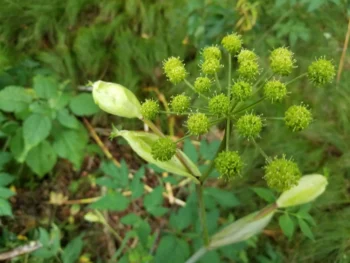
Filmy Angelica: A Delicate Native Beauty for Woodland Gardens
If you’re looking to add some ethereal charm to your shade garden, meet filmy angelica (Angelica triquinata) – a delicate native perennial that brings a touch of woodland magic to any landscape. This lesser-known gem might not be the showiest plant in your garden, but its subtle beauty and ecological value make it a worthy addition for native plant enthusiasts.
What Makes Filmy Angelica Special?
Filmy angelica is a native perennial forb that belongs to the carrot family. Don’t let the name fool you – this isn’t your typical robust angelica. True to its common name, this species has a more delicate, almost translucent quality to its foliage that gives it an otherworldly appearance in dappled woodland light.
You might also see this plant listed under its botanical synonym, Angelica curtisii, in older gardening references or plant catalogs.
Where Does Filmy Angelica Call Home?
This charming native has its roots firmly planted in the eastern United States, naturally occurring across nine states: Georgia, Kentucky, Maryland, North Carolina, Pennsylvania, South Carolina, Tennessee, Virginia, and West Virginia. It’s particularly fond of the Appalachian Mountain region, where it thrives in the cool, moist conditions of mountain woodlands.
- Species observed
- No observations
Garden Appeal and Design Role
While filmy angelica won’t stop traffic with bold blooms, it offers something equally valuable – refined elegance. Its delicate, fern-like foliage creates beautiful textural contrast in shade gardens, and its small clusters of white umbel flowers provide subtle seasonal interest during its blooming period.
This plant works wonderfully in:
- Native plant gardens
- Woodland gardens
- Shade borders
- Naturalistic landscapes
- Rain gardens (where moisture levels are appropriate)
Growing Conditions That Make Filmy Angelica Happy
Think woodland floor when planning where to plant your filmy angelica. This native thrives in conditions that mimic its natural mountain habitat:
- Light: Partial to full shade (morning sun is okay, but avoid harsh afternoon sun)
- Soil: Moist, well-draining, organic-rich soil
- Hardiness: USDA zones 4-8
- Moisture: Consistent moisture without being waterlogged
Planting and Care Tips
The good news? Filmy angelica is refreshingly low-maintenance once it’s settled into your garden. Here’s how to give it the best start:
- Plant in spring or fall when temperatures are moderate
- Amend heavy clay soils with compost to improve drainage
- Mulch around plants to retain moisture and suppress weeds
- Water regularly during the first growing season to establish roots
- Once established, it’s quite drought-tolerant in shady locations
Wildlife and Pollinator Benefits
While filmy angelica’s flowers may be small, they’re mighty when it comes to supporting local wildlife. The umbel-shaped flower clusters attract various small pollinators, including flies and small native bees. As a native plant, it also supports local ecosystems in ways that non-native alternatives simply can’t match.
Should You Grow Filmy Angelica?
If you’re creating a native plant garden or trying to support local wildlife, filmy angelica deserves serious consideration. It’s perfect for gardeners who appreciate subtle beauty over flashy displays and want to create authentic woodland environments.
However, if you’re looking for bold color or dramatic focal points, you might want to pair this delicate beauty with more robust native companions like wild ginger, coral bells, or native ferns.
The bottom line? Filmy angelica may be quiet, but it’s the kind of plant that rewards close observation and adds authentic character to shade gardens. For native plant enthusiasts in its natural range, it’s definitely worth seeking out from reputable native plant suppliers.