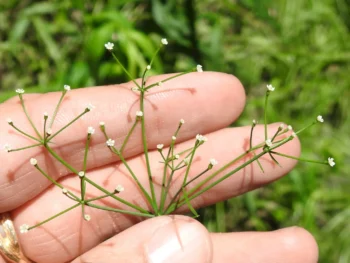
Finger Dogshade: A Native Wetland Gem for Your Garden
If you’re looking for a charming native annual that thrives in those tricky wet spots in your garden, let me introduce you to finger dogshade (Cynosciadium digitatum). This delightful little plant might not be a household name, but it’s a wonderful addition to naturalistic gardens and wetland areas across the southeastern and south-central United States.
What Makes Finger Dogshade Special?
Finger dogshade is a true native American plant, naturally occurring across nine states from Illinois down to Texas and over to Alabama. As an annual forb in the carrot family (Apiaceae), it brings that classic delicate, lacy look that makes gardens feel wild and natural. The name finger dogshade comes from its distinctive deeply divided leaves that look like tiny green fingers reaching out from the stem.
This charming plant typically grows 6 to 18 inches tall and produces clusters of small white flowers in the classic umbrella-shaped pattern (called umbels) that’s characteristic of its plant family. These blooms appear from spring through early summer, creating a lovely carpet of white in wet meadows and garden edges.
Where Does Finger Dogshade Grow?
Finger dogshade calls the following states home: Alabama, Arkansas, Illinois, Louisiana, Mississippi, Missouri, Oklahoma, Tennessee, and Texas. If you live in these areas, you’re in luck – this plant is perfectly adapted to your local climate and growing conditions.
- Species observed
- No observations
Perfect Growing Conditions
Here’s where finger dogshade really shines – it loves moisture! This plant has a facultative wetland status, which is a fancy way of saying it usually grows in wetlands but can handle some drier conditions too. Think of it as your go-to plant for:
- Rain gardens
- Pond edges
- Low-lying areas that stay moist
- Ditches and swales
- Naturalized wetland gardens
Finger dogshade thrives in USDA hardiness zones 6 through 9, making it suitable for most of its native range. It prefers full sun to partial shade and consistently moist to wet soil conditions.
Why Grow Finger Dogshade?
There are several compelling reasons to consider adding this native annual to your garden:
Native Plant Benefits: As a true native species, finger dogshade supports local ecosystems and requires no special care once established in the right conditions. Native plants are naturally adapted to local rainfall, soil, and climate patterns.
Problem-Solver Plant: Got a wet spot in your yard where other plants struggle? Finger dogshade could be your answer. It actually prefers the conditions that challenge many garden plants.
Wildlife Support: Like other members of the carrot family, finger dogshade likely provides nectar and pollen for small beneficial insects, though specific wildlife benefits aren’t well-documented for this particular species.
Low Maintenance: Once you understand its moisture needs, finger dogshade is remarkably easy to grow. As an annual, it will self-seed in suitable conditions.
Garden Design Ideas
Finger dogshade works beautifully in:
- Native plant gardens
- Wetland restoration projects
- Rain gardens and bioswales
- Naturalistic landscapes
- Wildlife habitat gardens
Its delicate texture and white flowers make it an excellent companion for other wetland natives like blue flag iris, cardinal flower, or swamp milkweed.
Planting and Care Tips
Growing finger dogshade successfully is all about understanding its preferences:
Soil: Provide consistently moist to wet soil. It can handle brief dry periods but really prefers steady moisture.
Light: Full sun to partial shade works well, though it may be more compact in full sun.
Planting: Since it’s an annual, you’ll need to start fresh each year unless it self-seeds. Plant seeds in spring after the last frost date.
Maintenance: Very low maintenance once established in the right spot. Simply ensure adequate moisture during dry spells.
Self-Seeding: In ideal conditions, finger dogshade may self-seed, creating a naturalized colony over time.
Is Finger Dogshade Right for Your Garden?
Consider finger dogshade if you:
- Live within its native range
- Have consistently moist or wet areas to plant
- Enjoy naturalistic garden styles
- Want to support native plant communities
- Need a solution for challenging wet spots
However, this plant might not be the best choice if you have only dry, well-drained garden areas or prefer formal, structured garden designs.
The Bottom Line
Finger dogshade may be a lesser-known native, but it’s a perfect example of how the right plant in the right place can thrive with minimal fuss. If you have the moisture conditions it craves and live within its native range, this charming annual could become a delightful addition to your native plant palette. Sometimes the most rewarding garden plants are the ones that simply belong where you plant them – and finger dogshade definitely belongs in wet, wild spaces across its native southeastern and south-central range.