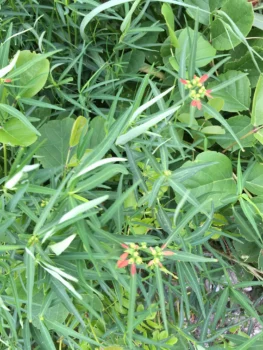
Fire on the Mountain: A Colorful Native Annual Worth Knowing
If you’re looking for a plant that brings late-season drama to your garden without requiring a green thumb, fire on the mountain (Euphorbia cyathophora) might just be your new best friend. This cheerful native annual has been quietly brightening American gardens and wild spaces for generations, and it’s about time more gardeners discovered its charm.
What’s in a Name?
You might also hear this delightful plant called Mexican fire plant, and both common names perfectly capture its fiery appeal. The botanical name Euphorbia cyathophora places it in the diverse spurge family, but don’t let that intimidate you—this is one of the friendlier members of the clan.
Where Fire on the Mountain Calls Home
This plant is a true American native, naturally occurring across much of the southeastern United States and extending into parts of the Southwest. You’ll find it growing wild from Virginia down to Florida and as far west as Texas, with populations also thriving in Alabama, Arkansas, Georgia, Louisiana, Mississippi, North Carolina, South Carolina, and Tennessee. However, it has spread beyond its native range and now grows in many other states including Arizona, California, Illinois, Indiana, and even as far north as New York, though it’s considered non-native in places like Hawaii.
- Species observed
- No observations
Why You Might Want to Plant It
Fire on the mountain earns its place in the garden through several appealing qualities:
- Stunning late-season color: Just when many flowers are calling it quits, this plant puts on its best show with brilliant red-orange bracts that look like colorful flowers
- Low maintenance: Once established, it’s quite drought-tolerant and thrives in poor soils where other plants struggle
- Pollinator magnet: The small true flowers attract bees and butterflies, adding life to your garden
- Self-sufficient: As an annual that readily self-sows, it can maintain its presence in your garden with minimal intervention
- Native plant benefits: In most of the continental US, you’re supporting local ecosystems by growing this native species
Potential Drawbacks to Consider
Like any plant, fire on the mountain isn’t perfect for every situation:
- Enthusiastic self-seeder: It can spread more than you might want if left unchecked
- Annual nature: You’ll need to replant or rely on self-seeding each year in most climates
- Spurge family traits: The milky sap can be irritating to skin and eyes, so handle with care
Perfect Garden Settings
Fire on the mountain shines in informal garden settings where its relaxed, naturalized growth habit fits right in. Consider it for:
- Wildflower meadows and prairie gardens
- Cottage garden borders
- Native plant landscapes
- Areas where you want late-season color
- Spots with poor or sandy soil where other plants struggle
Growing Conditions and Care
The beauty of fire on the mountain lies in its easygoing nature. Here’s what it prefers:
- Sunlight: Full sun to partial shade, though it colors up best with plenty of sunshine
- Soil: Well-draining soil is key—it actually prefers sandy or poor soils over rich, heavy ones
- Water: Drought-tolerant once established, but appreciates occasional watering during dry spells
- Hardiness: Hardy as an annual in most climates, can act as a short-lived perennial in zones 9-11
Planting and Care Tips
Getting started with fire on the mountain couldn’t be simpler:
- From seed: Direct sow seeds in spring after the last frost, or start indoors 6-8 weeks earlier
- Spacing: Allow 12-18 inches between plants as they can reach 2-3 feet tall and spread about as wide
- Maintenance: Minimal care required—just water during establishment and deadhead if you want to control self-seeding
- Self-seeding: Allow some flowers to go to seed if you want plants to return next year
Water Wisdom
According to wetland classifications, fire on the mountain generally prefers upland conditions, rarely appearing in wetland areas. This makes it an excellent choice for those drier spots in your garden where moisture-loving plants struggle.
Wildlife and Pollinator Benefits
While the showy red bracts grab human attention, it’s the small, less conspicuous true flowers that attract pollinators. Bees and butterflies appreciate the nectar source, especially valuable since the plant blooms when many other flowers are finished for the season.
The Bottom Line
Fire on the mountain offers an excellent combination of native plant benefits, easy care, and reliable late-season color. While it may not be suitable for formal gardens or areas where you need strict control over plant placement, it’s a wonderful addition to naturalized landscapes and informal garden settings. In most of the continental United States, you’re also supporting native biodiversity by choosing this charming annual over non-native alternatives.
Just remember to wear gloves when handling it, and you’ll have a delightfully low-maintenance plant that brings a spark of color to your garden when you need it most.