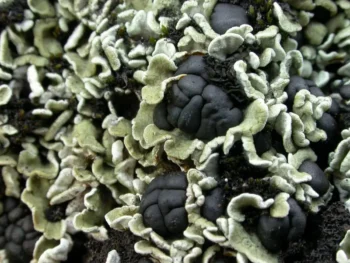
Fishscale Lichen: The Tiny Desert Survivor You Might Miss
Have you ever wandered through a desert landscape and noticed small, crusty patches of orange or reddish-brown growth clinging to rocks and soil? You might have stumbled upon fishscale lichen (Psora rubiformis), one of nature’s most resilient little survivors. While you can’t exactly plant this fascinating organism in your garden like you would a tomato, understanding what it is and how to spot it can deepen your appreciation for the incredible diversity of life that exists right under our noses.
What Exactly Is Fishscale Lichen?
Let’s clear up any confusion right away: fishscale lichen isn’t a plant in the traditional sense. It’s actually a lichen – a remarkable partnership between a fungus and an alga (or sometimes cyanobacteria) living together in perfect harmony. The fungus provides structure and protection, while the alga does the heavy lifting of photosynthesis, creating food for both partners. It’s like nature’s ultimate roommate situation that actually works!
Psora rubiformis gets its fishscale common name from its distinctive appearance – the surface often breaks up into small, scale-like segments that can remind you of fish scales. The scientific name might be a mouthful, but it’s also known by the synonym Lecidea rubiformis in some older botanical references.
Where to Find This Desert Dweller
Fishscale lichen is native to North America, with its sweet spot being the western regions of the continent. You’ll typically encounter it in arid and semi-arid environments where it thrives in conditions that would make most plants throw in the towel.
Spotting Fishscale Lichen in the Wild
Ready to become a lichen detective? Here’s what to look for:
- Color: Ranges from orange to reddish-brown, sometimes with a slightly crusty or granular appearance
- Texture: Forms small, patch-like growths that often crack into scale-like segments
- Location: Look on soil surfaces, desert pavement, and sometimes rocks in dry environments
- Size: Individual patches are typically small, usually just a few centimeters across
Is Fishscale Lichen Beneficial to Your Garden?
While you can’t cultivate fishscale lichen like you would your favorite perennials, its presence in natural areas around your property is actually a good sign. Lichens are excellent indicators of air quality – they’re sensitive to pollution, so seeing them suggests you’ve got relatively clean air in your neck of the woods.
In desert ecosystems, lichens like Psora rubiformis play important roles:
- They help stabilize soil and prevent erosion
- They contribute to nutrient cycling in harsh environments
- They provide habitat for tiny invertebrates
- They’re part of the complex web of desert life
Why You Can’t Just Plant It
Here’s where fishscale lichen differs dramatically from your typical garden plants – you simply can’t cultivate it. Lichens have incredibly specific requirements and complex relationships with their environment that make them nearly impossible to establish artificially. They grow exceedingly slowly and need just the right combination of climate, substrate, and environmental conditions to thrive.
If you’re interested in supporting native lichens, the best approach is to preserve existing natural habitats and minimize disturbance to areas where they’re already established.
Appreciating the Small Wonders
Next time you’re hiking through desert terrain or exploring arid landscapes, take a moment to look down at those seemingly barren patches of ground. You might spot fishscale lichen quietly doing its thing – surviving in conditions that would challenge most life forms, slowly building soil, and adding its own unique beauty to the landscape.
While fishscale lichen won’t be winning any garden design awards or attracting butterflies to your yard, it represents something pretty amazing: life’s ability to adapt and thrive in the most unlikely places. Sometimes the smallest organisms have the biggest lessons to teach us about resilience and cooperation.