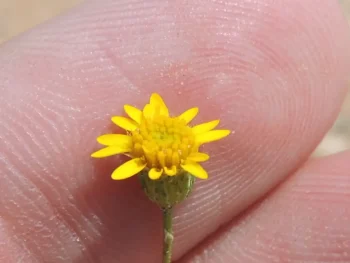
Fiveneedle Pricklyleaf: A Tough-as-Nails Native Wildflower for Desert Gardens
If you’re looking for a plant that can handle the heat, drought, and still put on a cheerful show of flowers, let me introduce you to fiveneedle pricklyleaf (Thymophylla pentachaeta var. belenidium). This scrappy little native wildflower might have a mouthful of a name, but it’s got the personality to match – tough, reliable, and surprisingly charming once you get to know it.
What is Fiveneedle Pricklyleaf?
Fiveneedle pricklyleaf is a native perennial herb that belongs to the sunflower family. Don’t let the word herb fool you – this isn’t something you’ll be adding to your pasta sauce. In botanical terms, it’s what we call a forb, which simply means it’s a flowering plant without woody stems. Think of it as nature’s answer to What if we made a daisy that could survive in the desert?
This hardy little plant has had quite the identity crisis over the years, previously going by several scientific names including Dyssodia belenidium and Dyssodia thurberi. But regardless of what botanists want to call it, gardeners know it as a dependable performer in challenging conditions.
Where Does It Call Home?
Fiveneedle pricklyleaf is a true native of the American Southwest, naturally occurring across six states: Arizona, California, Nevada, New Mexico, Texas, and Utah. It thrives in the desert and semi-desert regions where many other plants throw in the towel. This wide distribution tells you something important – this plant knows how to adapt and survive in some pretty tough neighborhoods.
- Species observed
- No observations
Why You Might Want to Grow It
There are several compelling reasons to give fiveneedle pricklyleaf a spot in your garden:
- It’s authentically local: As a native plant, it supports local ecosystems and wildlife
- Drought tolerance champion: Once established, it needs minimal water
- Pollinator magnet: The small, bright yellow daisy-like flowers attract native bees, butterflies, and other beneficial insects
- Low maintenance: Perfect for gardeners who want beauty without the fuss
- Year-round interest: As a perennial, it comes back each year
Perfect Garden Situations
Fiveneedle pricklyleaf shines brightest in these garden settings:
- Xeriscaping projects: Ideal for water-wise landscaping
- Rock gardens: Loves well-draining, rocky conditions
- Native plant gardens: A natural choice for authentic regional landscapes
- Desert-themed landscapes: Complements other arid-adapted plants beautifully
- Wildlife gardens: Supports native pollinators and beneficial insects
Growing Conditions and Care
The beauty of fiveneedle pricklyleaf lies in its simplicity. Here’s what it needs to thrive:
Sunlight: Full sun is essential. This plant has evolved under the intense desert sun and needs those bright rays to perform its best.
Soil: Well-draining soil is absolutely critical. Sandy, rocky, or gravelly soils work wonderfully. If your soil holds water, consider creating raised beds or adding plenty of coarse sand and gravel to improve drainage.
Water: Once established, very little supplemental watering is needed. In fact, overwatering is more likely to kill this plant than underwatering. Water deeply but infrequently during the first growing season to help establish roots, then step back and let nature take over.
Climate: Hardy in USDA zones 7-10, this plant can handle both heat and moderate cold, making it suitable for much of the southwestern and southern United States.
Planting and Maintenance Tips
Getting fiveneedle pricklyleaf established is refreshingly straightforward:
- Plant in fall or early spring when temperatures are moderate
- Space plants appropriately to allow for air circulation
- Water regularly the first year to establish roots, then reduce watering significantly
- Avoid fertilizing – desert plants often perform better in lean soils
- Deadhead spent flowers if you want to encourage more blooms, or leave them for wildlife
- Divide every few years if the plant becomes too large for its space
Is This Plant Right for Your Garden?
Fiveneedle pricklyleaf is an excellent choice if you’re gardening in its native range and want to create a sustainable, water-wise landscape. It’s particularly valuable for gardeners who appreciate native plants, want to support local wildlife, or are working with challenging, dry conditions.
However, it might not be the best choice if you prefer lush, tropical-looking gardens or live in areas with heavy clay soil and poor drainage. This plant is all about embracing the beauty of arid landscapes rather than fighting against them.
For gardeners willing to work with nature rather than against it, fiveneedle pricklyleaf offers a perfect combination of beauty, toughness, and ecological value. It’s a reminder that some of the most rewarding plants are those that are perfectly suited to their place – and sometimes, that place might just be your backyard.