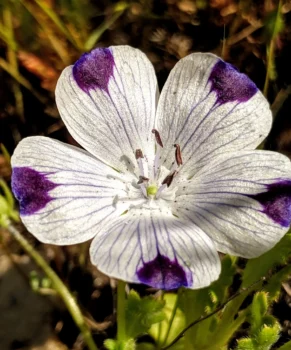
Fivespot: A Charming Native Annual That’s Perfect for Effortless Spring Color
If you’re looking for a delightful native wildflower that practically grows itself while providing early spring charm, meet the fivespot (Nemophila maculata). This unassuming little annual might just become your new favorite ground cover, especially if you love plants that do their own thing with minimal fuss from you.
What Makes Fivespot Special?
Fivespot earns its common name from its distinctive white flowers, each adorned with five purple spots at the petal tips. These cheerful blooms appear in early spring, creating a carpet of spotted stars that’s both whimsical and elegant. As an annual forb, fivespot completes its entire life cycle in one growing season, but don’t let that fool you into thinking it’s high-maintenance – this little native is surprisingly self-sufficient.
The plant stays low and spreads in a prostrate pattern, reaching only about 6 inches tall but creating a lovely ground-hugging display. Its fine-textured green foliage provides the perfect backdrop for those spotted white flowers, and the rapid growth rate means you won’t be waiting long to see results.
Where Fivespot Calls Home
This native beauty hails from the western United States, naturally occurring in California, Oregon, and Utah. By choosing fivespot for your garden, you’re not just adding pretty flowers – you’re supporting local ecosystems and providing habitat that native wildlife recognizes and appreciates.
- Species observed
- No observations
Why Your Garden (and Local Wildlife) Will Love Fivespot
Beyond its obvious aesthetic appeal, fivespot serves as an important early-season nectar source for pollinators. Small bees, flies, and other beneficial insects rely on these spring blooms when few other flowers are available. It’s like setting up a welcome buffet for your garden’s helpful visitors just when they need it most.
In landscape design, fivespot excels as:
- A charming ground cover for informal areas
- An excellent border plant along pathways
- A key player in wildflower meadow plantings
- A container plant for seasonal displays
- An understory plant in lightly shaded areas
Growing Conditions That Make Fivespot Happy
One of fivespot’s best qualities is its easygoing nature when it comes to growing conditions. This adaptable annual thrives in USDA zones 7-10 and prefers:
- Soil: Well-draining medium to fine-textured soils with a pH between 6.5-7.9
- Water: Medium moisture use with low drought tolerance (think consistent but not soggy)
- Light: Full sun to partial shade (shade tolerant, which is unusual for many wildflowers)
- Temperature: Cool season grower that needs at least 100 frost-free days
- Fertility: Low fertility requirements (no need to fuss with heavy fertilization)
Planting and Care: Easier Than You Think
Here’s where fivespot really shines – it’s incredibly low-maintenance. This plant is typically propagated by seed, and with about 74,848 seeds per pound, a little goes a long way!
Planting Tips:
- Direct sow seeds in fall or early spring when soil temperatures are cool
- Scatter seeds lightly over prepared soil (no deep planting needed)
- Keep soil consistently moist until germination
- No cold stratification required, making spring planting simple
Care Requirements:
- Water regularly during the growing season, especially during dry spells
- Minimal fertilizer needed due to low fertility requirements
- Allow some plants to go to seed for natural reseeding
- Enjoy the moderate self-seeding rate for future years
Is Fivespot Right for Your Garden?
Fivespot is an excellent choice if you want a native plant that provides early spring color with minimal effort. It’s particularly well-suited for gardeners who appreciate natural, informal landscapes and want to support local pollinators. The plant’s shade tolerance makes it versatile for various garden situations, from sunny meadows to partially shaded woodland edges.
Keep in mind that as an annual, you’ll need to replant each year or allow natural reseeding. However, with medium seed abundance and moderate spreading rate, established populations often maintain themselves with minimal intervention.
Consider fivespot if you’re creating native plant gardens, wildflower meadows, or simply want a charming, low-maintenance annual that celebrates the natural heritage of western North America. Your local pollinators will thank you, and you’ll enjoy the simple pleasure of those distinctive spotted blooms dancing in the spring breeze.