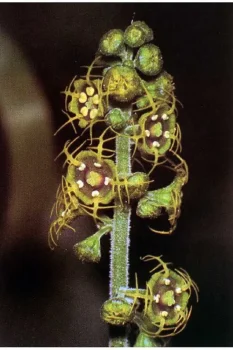
Fivestamen Miterwort: A Delicate Native Gem for Shaded Gardens
If you’re looking to add some understated charm to your shade garden, meet the fivestamen miterwort (Mitella pentandra) – a delightful native perennial that proves good things really do come in small packages. This petite woodland wildflower might not shout for attention like a flashy hosta, but its quiet elegance and ecological benefits make it a treasure worth discovering.
What Makes Fivestamen Miterwort Special?
The fivestamen miterwort is a charming forb – that’s garden-speak for a non-woody perennial plant – that brings subtle beauty to any native plant collection. True to its name, this little beauty produces delicate white flowers adorned with exactly five stamens, creating tiny star-like blooms that dance above heart-shaped leaves from late spring through early summer.
As a member of the saxifrage family, this plant has earned its place in North American ecosystems for thousands of years. It’s also known by the synonym Pectiantia pentandra, though most gardeners stick with the more pronounceable common name.
Where Does It Call Home?
This native gem has quite an impressive range across North America. You’ll find fivestamen miterwort growing naturally from the wilds of Alaska all the way down to New Mexico, thriving in states including Alberta, British Columbia, California, Colorado, Idaho, Montana, Nevada, Oregon, South Dakota, Utah, Washington, and Wyoming. Talk about a well-traveled plant!
- Species observed
- No observations
The species thrives in USDA hardiness zones 3-8, making it adaptable to a wide range of climates from chilly northern regions to more temperate areas.
Garden Appeal and Design Role
Don’t expect this modest beauty to steal the spotlight – fivestamen miterwort is more of a supporting actor in the garden drama. Its low-growing habit and delicate flowers make it perfect for:
- Woodland garden understories
- Shaded rock gardens
- Native plant borders
- Naturalized areas where you want gentle groundcover
- Moon gardens where white flowers glow in evening light
The plant’s heart-shaped leaves create attractive foliage even when it’s not blooming, and its compact size makes it ideal for filling in gaps between larger perennials or shrubs.
A Friend to Pollinators and Wildlife
While the flowers may be small, they’re mighty important to native ecosystems. Fivestamen miterwort attracts various small pollinators including native bees, beneficial flies, and other tiny insects that appreciate its accessible nectar and pollen. These smaller pollinators are often overlooked but play crucial roles in maintaining healthy garden ecosystems.
Growing Conditions: Keep It Cool and Moist
Think of fivestamen miterwort as the cool customer of the plant world – it prefers life in the slow lane with plenty of shade and consistent moisture. Here’s what makes this plant happiest:
- Light: Partial to full shade (morning sun is okay, but avoid harsh afternoon sun)
- Soil: Moist, well-draining soil with good organic content
- Water: Consistent moisture without waterlogging
- Temperature: Cool conditions; struggles in hot, dry climates
Wetland Connections
Interestingly, fivestamen miterwort has varying relationships with wetlands depending on where it’s growing. In Alaska and the Arid West, it’s considered a Facultative Wetland plant, meaning it usually hangs out in wetlands but can handle drier spots. In the Great Plains and Western Mountains regions, it’s simply Facultative, meaning it’s equally happy in wet or dry conditions. This flexibility makes it a great choice for gardeners dealing with variable moisture levels.
Planting and Care Tips
The good news about fivestamen miterwort? It’s refreshingly low-maintenance once established. Here’s how to give it the best start:
- Planting time: Spring is ideal, after the last frost
- Spacing: Plant 6-12 inches apart for eventual groundcover effect
- Mulching: Apply organic mulch to retain moisture and suppress weeds
- Watering: Keep consistently moist, especially during establishment
- Fertilizing: Generally unnecessary; compost or leaf mold is sufficient
- Maintenance: Minimal pruning needed; just remove spent flower stalks if desired
Why Choose Fivestamen Miterwort?
This native perennial offers several compelling reasons to include it in your garden:
- Supports native pollinators and local ecosystems
- Requires minimal maintenance once established
- Provides subtle, long-lasting beauty
- Adapts to various moisture conditions
- Hardy across a wide range of climates
- Perfect for challenging shady spots where other plants struggle
The Bottom Line
Fivestamen miterwort may not be the showiest plant in your garden center, but it’s definitely one of the most reliable and ecologically valuable. If you’re building a native plant garden, working with challenging shady conditions, or simply want to support local wildlife with minimal effort, this quiet charmer deserves a spot in your landscape. Sometimes the best garden additions are the ones that work behind the scenes, creating the perfect foundation for more dramatic plants to shine – and fivestamen miterwort excels at playing that supporting role with grace and resilience.