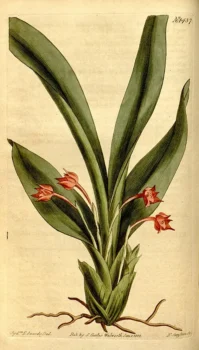
Flame Orchid: A Fiery Jewel from Puerto Rico’s Mountains
If you’ve ever dreamed of growing a truly spectacular orchid that brings a burst of tropical fire to your collection, meet the flame orchid (Maxillaria coccinea). This stunning epiphytic orchid is like nature’s own little torch, lighting up the cloud forests of Puerto Rico with its brilliant red-orange blooms.
What Makes the Flame Orchid Special?
The flame orchid is a perennial forb that’s perfectly adapted to life in the trees. Unlike your typical ground-dwelling plants, this beauty is an epiphyte, meaning it grows on other plants (usually trees) without being parasitic. Think of it as nature’s way of creating a living garden in the sky!
This orchid belongs to the Maxillaria genus and was previously known by the synonym Ornithidium coccineum. While it may not have a long list of common names, flame orchid perfectly captures its fiery appearance.
Where Does It Call Home?
The flame orchid is native exclusively to Puerto Rico, where it thrives in the island’s lush montane forests. It’s perfectly adapted to the humid, filtered-light conditions found in these tropical mountain environments.
- Species observed
- No observations
Why Consider Growing a Flame Orchid?
Here’s what makes this orchid a showstopper:
- Stunning blooms: The bright red-orange flowers are absolutely captivating, typically measuring 1-2 inches across
- Unique appeal: It’s not your everyday orchid – this one has serious wow factor
- Pollinator magnet: Those fiery colors aren’t just for show; they attract small insects and potentially even hummingbirds
- Conversation starter: Growing a Puerto Rican endemic is sure to impress fellow plant enthusiasts
Is This Orchid Right for Your Garden?
Let’s be honest – the flame orchid isn’t for everyone. This is definitely a plant for the more adventurous gardener or serious orchid collector. Here’s what you need to know:
Perfect for:
- Tropical gardens in USDA zones 10-12
- Greenhouse cultivation
- Orchid collections
- Gardeners who love a challenge
Not ideal for:
- Beginner gardeners
- Areas with cold winters (unless grown indoors)
- Low-maintenance garden designs
Growing Your Flame Orchid Successfully
Growing a flame orchid is like creating a little piece of Puerto Rican cloud forest in your own space. Here’s how to keep your fiery beauty happy:
Growing Conditions:
- Light: Bright, filtered light – think dappled sunlight through tree branches
- Humidity: High humidity (60-80%) is essential
- Temperature: Warm temperatures year-round, ideally 65-85°F
- Air circulation: Good airflow prevents fungal issues
Planting and Care Tips:
- Mount on cork bark or tree fern, or use a well-draining orchid bark mix
- Water regularly but avoid soggy conditions – orchids hate wet feet!
- Mist regularly to maintain humidity
- Feed with diluted orchid fertilizer during growing season
- Watch for common orchid pests like scale and mealybugs
The Bottom Line
The flame orchid is truly a gem for those ready to embrace its specific needs. While it requires more attention than your average houseplant, the reward of those spectacular blooms makes every bit of extra care worthwhile. If you’re in a suitable climate or have a greenhouse, and you’re ready for a rewarding challenge, this Puerto Rican beauty could be the perfect addition to your orchid family.
Just remember – with great beauty comes great responsibility. This orchid needs consistent care and the right environment to truly thrive. But for those willing to put in the effort, the flame orchid offers a unique opportunity to grow a piece of Puerto Rico’s natural heritage right in your own garden.