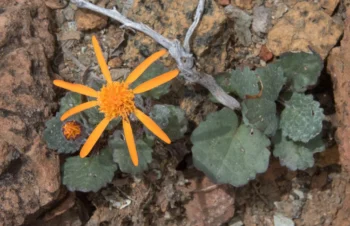
Flame Ragwort: A Rare California Native Worth Protecting in Your Garden
Meet flame ragwort (Packera greenei), a charming California native that’s both a garden gem and a conservation priority. This perennial wildflower brings sunny yellow blooms to native landscapes while supporting local pollinators – but its rarity means choosing this plant comes with special responsibility.
What Makes Flame Ragwort Special
Flame ragwort is a herbaceous perennial that belongs to the diverse Packera genus, formerly classified as Senecio greenei. As a forb, it lacks woody stems but returns year after year with fresh growth from its perennial root system. The plant produces clusters of bright yellow, daisy-like flowers that create a cheerful display in late spring and early summer.
This California endemic has adapted to the state’s unique mountain environments, making it a true representative of the region’s natural heritage. Its compact growth habit and drought tolerance reflect thousands of years of evolution in Mediterranean-climate conditions.
Where Does Flame Ragwort Grow?
Flame ragwort is found exclusively in California, where it grows in montane and subalpine regions. This limited distribution makes it a special addition to gardens within its native range, but also highlights why conservation of this species matters.
- Species observed
- No observations
A Word About Rarity
Here’s something important to know: flame ragwort has a Global Conservation Status of S3?, which indicates some level of conservation concern. While the exact status is still being defined, this classification suggests the plant may be vulnerable in the wild. If you’re interested in growing flame ragwort, please source plants or seeds only from reputable native plant nurseries that propagate their stock responsibly – never collect from wild populations.
Why Choose Flame Ragwort for Your Garden
Despite its rarity concerns, flame ragwort can be a wonderful addition to appropriate gardens when sourced responsibly. Here’s why gardeners love this native:
- Supports native pollinators including bees and butterflies
- Drought-tolerant once established
- Requires minimal maintenance
- Adds authentic California native character to landscapes
- Bright yellow flowers provide seasonal color
Perfect Garden Settings
Flame ragwort shines in several garden types:
- Native plant gardens: Pairs beautifully with other California natives
- Rock gardens: Its compact size and drainage needs make it ideal for rocky settings
- Drought-tolerant landscapes: Perfect for water-wise gardening
- Naturalistic plantings: Helps recreate California’s mountain meadow environments
Growing Conditions and Care
Flame ragwort appreciates growing conditions that mimic its native mountain habitat:
- Light: Full sun to partial shade
- Soil: Well-draining soil is essential – avoid heavy clay or waterlogged conditions
- Water: Drought-tolerant once established, but appreciates occasional deep watering during dry spells
- Hardiness: Likely suitable for USDA zones 7-9 based on its California distribution
Planting and Care Tips
Success with flame ragwort starts with proper planting:
- Plant in fall or early spring when temperatures are mild
- Ensure excellent drainage – amend heavy soils with coarse sand or gravel
- Water regularly during the first growing season to establish roots
- Once established, reduce watering frequency but provide deeper soaks
- Minimal fertilization needed – too much nutrition can reduce flowering
- Deadhead spent flowers if desired, though seed heads provide wildlife value
Supporting Pollinators and Wildlife
Like many members of the sunflower family, flame ragwort serves as an important nectar source for native pollinators. The bright yellow flowers attract bees, butterflies, and other beneficial insects that have co-evolved with California’s native flora. By planting flame ragwort, you’re helping support the complex web of relationships that keep native ecosystems healthy.
The Bottom Line
Flame ragwort offers California gardeners a chance to grow a truly special native plant while contributing to conservation efforts. Its cheerful flowers, low maintenance requirements, and pollinator benefits make it a valuable garden addition. Just remember to source your plants responsibly and consider this rare beauty a privilege to grow rather than just another garden plant. When we choose natives like flame ragwort, we’re not just beautifying our landscapes – we’re preserving California’s natural heritage for future generations.