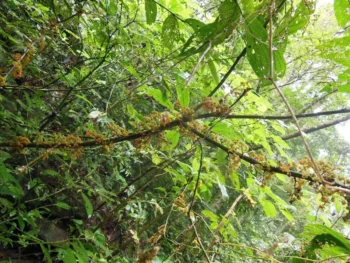
Flameberry: A Native Puerto Rican Shrub Worth Knowing
If you’re gardening in Puerto Rico or interested in Caribbean native plants, you might want to get acquainted with flameberry (Urera caracasana). This intriguing native shrub belongs to the nettle family, though don’t let that scare you away just yet – it’s got its own unique charm that makes it worth considering for the right garden setting.
What Exactly Is Flameberry?
Flameberry, scientifically known as Urera caracasana, is a perennial shrub that’s truly at home in Puerto Rico. Like most shrubs, it’s a multi-stemmed woody plant that typically stays under 13-16 feet tall, making it a manageable size for most garden spaces. You might also see it listed under its synonym Urtica caracasana in older botanical references.
Where Does It Call Home?
This native beauty is found naturally in Puerto Rico, where it has adapted perfectly to the local climate and ecosystem. As a true native species, it plays an important role in supporting the island’s natural biodiversity and has co-evolved with local wildlife over thousands of years.
- Species observed
- No observations
A Wetland-Friendly Choice
One of flameberry’s most interesting characteristics is its flexibility when it comes to water. It’s classified as a facultative wetland plant, which is a fancy way of saying it’s perfectly happy in wet conditions but can also tolerate drier spots. This adaptability makes it potentially useful for:
- Rain gardens and bioswales
- Areas with seasonal flooding
- Transitional zones between wet and dry areas
- Natural landscape restoration projects
The Growing Challenge
Here’s where things get a bit tricky – while flameberry sounds like it could be a wonderful addition to Puerto Rican gardens, detailed growing information for this specific species is surprisingly scarce. This isn’t uncommon with native Caribbean plants that haven’t made their way into mainstream horticulture yet.
What we do know is that as a native Puerto Rican shrub, it’s likely adapted to:
- Tropical and subtropical conditions
- Variable moisture levels
- Local soil conditions
- Hurricane-force winds and recovery
Should You Plant Flameberry?
If you’re gardening in Puerto Rico, flameberry could be an excellent choice for several reasons. Native plants are typically lower maintenance once established, provide crucial habitat for local wildlife, and help preserve the island’s natural heritage. However, the limited availability of growing information means you’ll need to be a bit of a plant pioneer.
Before adding flameberry to your garden, consider:
- Sourcing plants or seeds from reputable native plant nurseries
- Starting with a small trial area to observe its growth habits
- Connecting with local native plant societies or botanical gardens for advice
- Documenting your experience to help other gardeners
The Bottom Line
Flameberry represents the kind of native plant that could be a real gem for Puerto Rican gardeners willing to experiment. While we don’t have all the growing details figured out yet, its native status and wetland adaptability make it worth investigating further. Sometimes the most rewarding garden plants are the ones that haven’t been discovered by mainstream horticulture yet.
If you’re interested in growing truly native Puerto Rican plants and don’t mind being part of the learning process, flameberry might just flame up your interest in Caribbean native gardening.