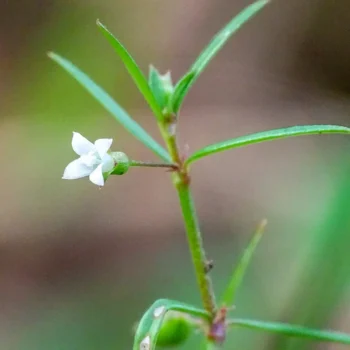
Flat-Top Mille Graines: A Humble Wildflower Worth Knowing
If you’ve ever wandered through a southeastern meadow or disturbed area, chances are you’ve encountered flat-top mille graines (Oldenlandia corymbosa) without even realizing it. This modest little wildflower might not win any beauty contests, but it has some interesting qualities that make it worth a second look for certain gardening situations.
What Is Flat-Top Mille Graines?
Flat-top mille graines is a small forb—basically a non-woody flowering plant—that can behave as either an annual or perennial depending on conditions. You might also see it listed under its synonym Hedyotis corymbosa in some plant references. The name mille graines means thousand seeds in French, which gives you a hint about this plant’s prolific seed production!
True to its common name, this plant produces tiny white to pale pink flowers arranged in distinctive flat-topped clusters called corymbs. The flowers are quite small, but when grouped together, they create a delicate, lacy appearance that adds subtle texture to any planting.
Where Does It Come From?
Here’s where things get a bit complicated. Flat-top mille graines is native to much of the southeastern United States, including Alabama, Arkansas, Florida, Georgia, Louisiana, Mississippi, North Carolina, South Carolina, and Texas. It’s also native to Puerto Rico and the U.S. Virgin Islands. However, it’s considered non-native in Hawaii and other Pacific Basin locations, where it has naturalized.
- Species observed
- No observations
Should You Plant It in Your Garden?
The answer depends on what you’re looking for and where you live. If you’re in its native range in the Southeast, flat-top mille graines can be a useful addition to:
- Wildflower gardens that celebrate regional flora
- Areas with poor or disturbed soils where other plants struggle
- Naturalized landscapes that require minimal maintenance
- Spaces where you want to attract small pollinators
However, there are some considerations to keep in mind. This plant is quite the self-sower and can pop up in unexpected places. While not officially listed as invasive, it can be somewhat weedy in behavior. If you’re looking for a more controlled garden appearance, you might want to consider other native alternatives that offer similar benefits with less wandering tendencies.
Growing Conditions and Care
One of flat-top mille graines’ best qualities is its adaptability. This tough little plant thrives in USDA hardiness zones 8-11 and isn’t particularly fussy about growing conditions:
- Sunlight: Full sun to partial shade
- Soil: Tolerates poor soils and various soil types
- Water: Adaptable to both wetland and upland conditions (facultative wetland status in most regions)
- Maintenance: Very low once established
The plant stays relatively low to the ground and spreads through its abundant seed production rather than aggressive root systems.
Wildlife and Pollinator Benefits
While the flowers are small, they do provide nectar for tiny pollinators, including small native bees and beneficial insects. The seeds may also provide food for small birds, though this plant isn’t typically considered a major wildlife food source.
Planting and Care Tips
If you decide to grow flat-top mille graines, here are some practical tips:
- Seeds can be direct-sown in spring after the last frost
- No special soil preparation needed—this plant actually seems to prefer less fertile conditions
- Water occasionally during establishment, then let nature take over
- Deadhead flowers if you want to prevent excessive self-seeding
- Consider it more of a plant it and forget it addition to wild areas rather than formal garden beds
The Bottom Line
Flat-top mille graines is one of those plants that serves a specific purpose rather than being a garden showstopper. If you’re creating a native plant garden in the Southeast, working with challenging growing conditions, or simply want to support local ecosystems with minimal effort, it can be a useful addition. Just be prepared for its enthusiasm in spreading around!
For gardeners seeking more dramatic native alternatives, consider exploring other southeastern natives like wild bergamot, purple coneflower, or native asters, which offer similar low-maintenance benefits with more visual impact.