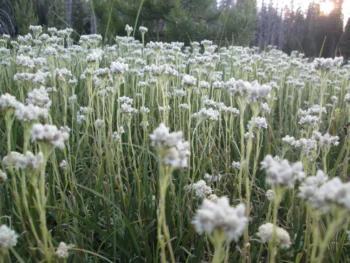
Flat-Top Pussytoes: A Charming Native Groundcover for Western Gardens
If you’re searching for a low-maintenance native groundcover that brings subtle charm to your western garden, meet flat-top pussytoes (Antennaria corymbosa). This delightful little perennial might have an amusing name, but it’s a serious contender for gardeners looking to create naturalized landscapes with authentic regional character.
What Is Flat-Top Pussytoes?
Flat-top pussytoes is a native perennial forb that forms attractive, spreading mats through underground runners. Unlike woody shrubs, this herbaceous plant stays close to the ground, reaching just one foot in height at maturity. Its gray-green foliage provides year-round interest, while small clusters of white flowers appear in spring, earning the plant its whimsical common name—the flowers really do resemble tiny cat paws!
As a stoloniferous plant, flat-top pussytoes spreads slowly but steadily, making it an excellent choice for patient gardeners who want sustainable, long-term ground coverage.
Where Does It Grow Naturally?
This hardy native calls western North America home, thriving across an impressive range that includes Alberta, British Columbia, California, Colorado, Saskatchewan, Idaho, Montana, Nevada, New Mexico, Oregon, Utah, Washington, and Wyoming. Its natural distribution spans both Canada and the lower 48 United States, demonstrating remarkable adaptability to diverse western climates.
- Species observed
- No observations
Why Choose Flat-Top Pussytoes for Your Garden?
There are several compelling reasons to consider this native charmer:
- True Native Status: As a genuine native species, it supports local ecosystems and requires minimal resources once established
- Low Maintenance: Slow growth means less pruning, and low fertility requirements mean less fertilizing
- Versatile Placement: Tolerates shade and can adapt to both wetland and non-wetland conditions
- Pollinator Support: Small white flowers provide nectar for native bees, flies, and other beneficial insects
- Soil Stabilization: Spreading root system helps prevent erosion on slopes
- Cold Hardy: Tolerates temperatures down to -18°F, making it suitable for harsh mountain climates
Perfect Garden Settings
Flat-top pussytoes shines in specific garden styles and locations:
- Rock gardens and alpine landscapes
- Naturalized meadow areas
- Native plant gardens
- Slope stabilization projects
- Understory plantings in partially shaded areas
- Low-water landscapes (with adequate moisture provision)
Growing Conditions and Care
Success with flat-top pussytoes requires understanding its specific preferences:
Soil: Prefers medium-textured, well-draining soils with a pH between 6.0-8.0. Avoid heavy clay or very sandy conditions.
Water: Despite having low drought tolerance, it needs consistent moisture and is considered a high water user. This might seem contradictory, but think of it as preferring steady, moderate watering rather than drought conditions.
Light: Shade tolerant, making it valuable for areas where many natives struggle
Climate: Needs at least 120 frost-free days and performs best in areas receiving 18-60 inches of annual precipitation
Hardiness: Thrives in USDA zones 3-8, perfect for most mountain and northern regions
Planting and Propagation Tips
Growing flat-top pussytoes requires patience but rewards you with long-term success:
From Seed: Seeds require cold stratification (winter chilling) before they’ll germinate. With approximately 7 million seeds per pound, a little goes a long way! Expect slow seedling establishment and low initial vigor.
From Containers: The easiest method for home gardeners. Plant 2,700-11,000 plants per acre for groundcover applications, though most home gardeners will need far fewer plants.
Spacing: Allow room for natural spreading, as the plant expands moderately through underground runners
Timing: Plant in spring or early fall when temperatures are moderate and moisture is adequate
Long-Term Care
Once established, flat-top pussytoes is refreshingly low-maintenance:
- Minimal fertilization needed (low fertility requirement is actually preferred)
- Slow growth means infrequent pruning
- No known toxicity or allelopathic effects
- Good fire tolerance once established
- Monitor moisture levels, especially during dry periods
Is Flat-Top Pussytoes Right for Your Garden?
This native groundcover is ideal for gardeners who:
- Want authentic regional plants that support local ecosystems
- Prefer low-maintenance, slow-growing options
- Need groundcover for partially shaded areas
- Have consistent water availability
- Appreciate subtle, naturalized beauty over flashy displays
However, it might not be the best choice if you need fast results, have very dry conditions without irrigation, or prefer dramatic flowering displays.
Flat-top pussytoes offers patient gardeners a chance to grow a genuine piece of western North American heritage. While it may not provide instant gratification, its quiet charm and ecological value make it a worthwhile addition to the right garden setting.