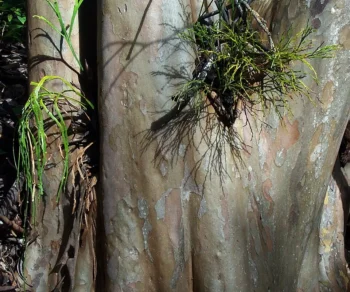
Flatfork Fern: A Living Fossil for Your Tropical Garden
Meet the flatfork fern (Psilotum complanatum), also known as moa nahele in Hawaiian – a plant so ancient it makes dinosaurs look like yesterday’s news! This fascinating whisk-fern isn’t your typical garden variety plant, and honestly, that’s exactly what makes it so intriguing.
What Exactly Is a Flatfork Fern?
Here’s where things get wonderfully weird: the flatfork fern isn’t actually a fern at all! It’s a whisk-fern, one of the most primitive vascular plants on Earth. Think of it as a botanical time machine that’s been quietly doing its thing for millions of years while the rest of the plant world got busy evolving flowers and fancy leaves.
This perennial forb grows as a collection of flattened, branching green stems that look like someone took a regular plant and hit the flatten button. No true leaves, no flowers, no fuss – just pure, primitive plant power.
Where Does It Call Home?
The flatfork fern is native to Hawaii and other Pacific Basin islands, including Guam and Palau. It’s perfectly adapted to tropical island life, thriving in the warm, humid conditions that make these places paradise for both plants and people.
- Species observed
- No observations
Should You Invite This Ancient Wonder Into Your Garden?
If you’re gardening in USDA zones 10-12 and love the idea of growing something truly unique, the flatfork fern could be your new conversation starter. However, this isn’t a plant for beginners or anyone expecting instant gratification.
The Good, The Bad, and The Quirky
Why you might love it:
- Absolutely unique appearance – your neighbors definitely won’t have one
- Low maintenance once established
- Fascinating botanical history
- Perfect for shade gardens where other plants struggle
- Great conversation piece for plant enthusiasts
Why you might want to think twice:
- Very specific growing requirements
- Extremely slow growing
- Limited availability
- No flowers or traditional ornamental appeal
- Only suitable for tropical climates
Growing Your Living Fossil
If you’re determined to give this ancient plant a try, here’s what you need to know:
Location, Location, Location: The flatfork fern has a facultative wetland status in Hawaii, meaning it can handle both wet and drier conditions, but it definitely prefers consistent moisture and excellent drainage. Think tropical rainforest floor rather than desert oasis.
Light Requirements: Keep it in shade to partial shade. Direct sunlight is not this plant’s friend – it much prefers the dappled light filtering through a forest canopy.
Care Tips:
- Maintain consistent soil moisture without waterlogging
- Provide high humidity if possible
- Use well-draining, organic-rich soil
- Protect from cold temperatures (it needs tropical warmth year-round)
- Be patient – this plant operates on geological time
What About Wildlife Benefits?
Don’t expect butterflies and bees to throw parties around your flatfork fern. Since it reproduces through spores rather than flowers, it doesn’t offer nectar or pollen. However, it may provide some habitat value for small creatures seeking shelter in its unique branching structure.
The Bottom Line
The flatfork fern is definitely not for everyone, but for the right gardener in the right climate, it’s a remarkable addition to a collection. If you’re fascinated by botanical oddities, love the idea of growing something virtually unchanged since prehistoric times, and have the patience of a saint, this could be your perfect match.
Just remember: this isn’t a plant you grow for quick results or flashy displays. It’s a plant you grow for the sheer wonder of having a living piece of evolutionary history in your garden. And honestly? Sometimes that’s the best reason of all.