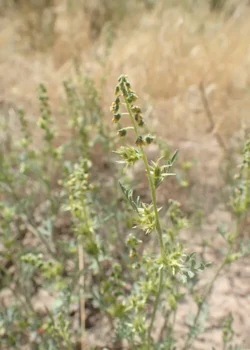
Flatspine Bur Ragweed: A Native Plant for Wildlife-Friendly Gardens
If you’re looking to support native wildlife while creating a low-maintenance garden, flatspine bur ragweed (Ambrosia acanthicarpa) might deserve a spot on your radar. This unassuming annual forb may not win any beauty contests, but it’s a hardworking native that plays an important role in natural ecosystems across much of North America.
What Is Flatspine Bur Ragweed?
Flatspine bur ragweed is a native annual forb that belongs to the sunflower family. As an herbaceous plant without woody stems, it completes its entire life cycle in one growing season. Don’t let the ragweed name scare you away – while it is wind-pollinated like its more notorious relatives, this species is generally less problematic for allergy sufferers.
You might also encounter this plant listed under its former scientific names, including Franseria acanthicarpa or Gaertneria acanthicarpa, but Ambrosia acanthicarpa is the current accepted name.
Where Does It Grow Naturally?
This adaptable native has one of the most impressive natural ranges you’ll find, stretching across a huge swath of North America. It grows naturally in 22 states and 2 Canadian provinces, from the prairies of Alberta and Saskatchewan down through the western and central United States, including Arizona, California, Colorado, Idaho, Kansas, Minnesota, Missouri, Montana, Nebraska, Nevada, New Mexico, North Dakota, Oklahoma, Oregon, South Dakota, Texas, Utah, Washington, and Wyoming.
- Species observed
- No observations
Should You Plant Flatspine Bur Ragweed?
Here’s the honest truth: flatspine bur ragweed isn’t going to make your neighbors stop and admire your garden. Its small, greenish flowers are definitely more functional than fabulous. But if you’re creating a wildlife garden, prairie restoration, or naturalized area, this native deserves serious consideration.
The Good:
- Excellent drought tolerance once established
- Provides seeds for birds and small mammals
- Supports native ecosystem relationships
- Requires minimal care and maintenance
- Adaptable to poor soils where other plants struggle
The Not-So-Good:
- Limited ornamental value
- May self-seed prolifically in ideal conditions
- Dies back completely each year (it’s an annual)
- Can look weedy in formal garden settings
Growing Conditions and Care
One of the best things about flatspine bur ragweed is how easy it is to grow – as long as you plant it in the right conditions. This tough native thrives in:
- Soil: Well-draining, sandy, or gravelly soils; tolerates poor fertility
- Sun: Full sun exposure
- Water: Drought tolerant; avoid overwatering
- Climate: Hardy in USDA zones 3-9
Size and Growth Habit
Expect your flatspine bur ragweed to reach 1-3 feet in both height and width. As an annual forb, it will sprout from seed each spring, grow through the summer, produce seeds in late summer or fall, then die with the first hard frost. The plant has a bushy, somewhat sprawling growth habit that works well in informal settings.
Best Uses in the Garden
Flatspine bur ragweed shines in specific garden situations:
- Prairie and meadow gardens
- Wildlife habitat areas
- Xeriscaping and drought-tolerant landscapes
- Naturalized or wild sections of larger properties
- Erosion control on slopes with poor soil
- Educational gardens focused on native plants
Wildlife Benefits
While flatspine bur ragweed may not attract butterflies with showy blooms, it provides valuable resources for wildlife. The seeds are an important food source for various bird species and small mammals, particularly during fall and winter when other food sources may be scarce.
Planting and Maintenance Tips
Growing flatspine bur ragweed is refreshingly straightforward:
- Direct seed in spring after the last frost
- Barely cover seeds with soil – they need light to germinate
- Water lightly until established, then let nature take over
- No fertilizing needed (it actually prefers lean soils)
- Allow plants to self-seed if you want them to return next year
- Remove spent plants in late fall or leave for winter wildlife interest
The Bottom Line
Flatspine bur ragweed won’t win any garden beauty pageants, but it’s a reliable native that earns its keep through ecological services rather than eye candy. If you’re passionate about supporting native wildlife, creating sustainable landscapes, or establishing prairie-style gardens, this humble annual deserves a place in your plant palette. Just remember to site it thoughtfully – it’s perfect for wild areas but might look out of place next to your prized roses!
For gardeners seeking more ornamental natives with similar growing requirements, consider exploring other drought-tolerant options like native grasses, wildflowers, or shrubs that can provide both beauty and wildlife benefits in your specific region.