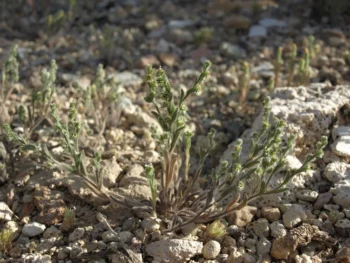
Flatspine Stickseed: A Hardy Native Wildflower for Low-Maintenance Gardens
Meet flatspine stickseed (Lappula occidentalis var. cupulata), a humble yet resilient native wildflower that’s been quietly thriving across North America long before fancy garden centers existed. While it may not win any beauty contests, this scrappy little annual has some surprising qualities that make it worth considering for the right garden setting.
What Is Flatspine Stickseed?
Flatspine stickseed is a native annual or biennial forb – essentially a non-woody plant that completes its life cycle in one to two years. Don’t let the stickseed name scare you off; it simply refers to the plant’s distinctive burr-like seeds that have tiny hooks for dispersal. Think of it as nature’s original velcro!
This hardy wildflower grows as a rough, somewhat hairy plant that produces small clusters of tiny white to pale blue flowers. While individual blooms are modest, they appear in branched clusters that can create a delicate, airy texture in the garden.
Where Does It Grow Naturally?
Flatspine stickseed is impressively widespread, calling much of North America home. You’ll find it growing naturally across an extensive range including Alberta, British Columbia, Saskatchewan, and numerous U.S. states from Arizona and California in the west to Iowa and Missouri in the east, and from Montana and North Dakota down to Texas and New Mexico.
- Species observed
- No observations
Should You Plant Flatspine Stickseed?
The answer depends entirely on what you’re trying to achieve in your garden. Here’s the honest truth about when this plant shines:
Great Choice If You Want:
- A truly low-maintenance native plant that thrives on neglect
- Something for prairie restoration or naturalized areas
- Plants that support small native pollinators and wildlife
- Coverage for difficult, dry, or poor soil areas
- Authentic wildflower meadow plantings
Skip It If You Prefer:
- Showy, ornamental flowers for formal gardens
- Plants with long blooming periods
- Neat, tidy garden appearances
- Low-spreading groundcovers
Growing Flatspine Stickseed Successfully
Ideal Growing Conditions
This prairie native is refreshingly undemanding. Flatspine stickseed thrives in full sun and well-drained soils, including poor, sandy, or rocky conditions that would challenge fussier plants. It’s naturally drought-tolerant once established and actually prefers lean soils over rich, amended garden beds.
USDA Hardiness Zones
Flatspine stickseed grows successfully in USDA zones 3-9, making it suitable for most of the continental United States and southern Canada.
Planting and Care Tips
- Seeding: Direct sow seeds in fall or early spring when they can experience natural cold stratification
- Spacing: Scatter seeds in naturalized areas or space plants 6-12 inches apart
- Watering: Minimal watering needed; drought tolerance is one of its best features
- Fertilizing: None needed – this plant actually prefers lean conditions
- Maintenance: Practically none required once established
Benefits to Wildlife and Pollinators
While flatspine stickseed may look unremarkable, it plays an important ecological role. The small flowers attract tiny native bees, beneficial wasps, and other small pollinators that often get overlooked in garden planning. The seeds provide food for birds, and the plant contributes to the complex web of native plant communities.
Design Ideas and Garden Placement
Think of flatspine stickseed as a supporting player rather than a star. It works beautifully in:
- Native wildflower meadows mixed with more showy species
- Prairie restoration projects
- Xeriscaping and drought-tolerant landscapes
- Naturalized areas where low maintenance is priority
- Transitional zones between cultivated and wild spaces
The Bottom Line
Flatspine stickseed won’t transform your garden into a showstopper, but it will add authentic native character with virtually zero effort on your part. If you’re creating habitat for wildlife, restoring natural areas, or simply want a plant that thrives on benign neglect, this modest wildflower deserves consideration. Just remember – it’s all about setting the right expectations and choosing the right spot for this unassuming native gem.