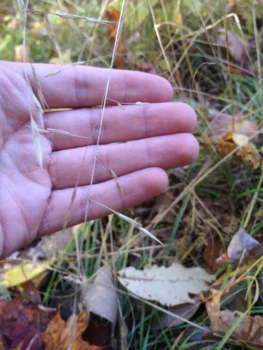
Flattened Oatgrass: A Resilient Native Grass for Naturalized Landscapes
If you’re looking for a low-maintenance native grass that won’t steal the spotlight but will quietly do its job in your landscape, flattened oatgrass (Danthonia compressa) might be just what you need. This unassuming perennial grass is like the reliable friend who’s always there for you – not flashy, but dependable and surprisingly tough.
What is Flattened Oatgrass?
Flattened oatgrass is a native perennial grass that forms neat, compact bunches across much of North America. Don’t let the name fool you – while it’s called an oatgrass, it’s not related to the oats in your breakfast bowl. This hardy grass typically reaches about 2.4 feet tall and produces small, yellowish flowers in late spring that aren’t particularly showy but get the job done.
Where Does It Grow Naturally?
This adaptable grass has quite an impressive resume when it comes to geography. Flattened oatgrass is native to Alaska, Canada, and much of the lower 48 states, including Alabama, Arkansas, Connecticut, Delaware, Georgia, Kentucky, Maine, Maryland, Massachusetts, Michigan, New Hampshire, New Jersey, New York, North Carolina, Ohio, Pennsylvania, Rhode Island, South Carolina, Tennessee, Vermont, Virginia, and West Virginia. Talk about a well-traveled plant!
- Species observed
- No observations
Why Consider Flattened Oatgrass for Your Garden?
While flattened oatgrass won’t win any beauty contests, it brings some serious practical benefits to the table:
- Extremely low maintenance: Once established, this grass practically takes care of itself
- Drought tolerant: Perfect for those forgot to water moments we all have
- Native plant benefits: Supports local ecosystems and requires no fertilizer
- Erosion control: Its moderate root system helps hold soil in place
- Fire tolerant: Bounces back well after fire events
- Adaptable to various soils: Happy in coarse, medium, or fine-textured soils
What Kind of Garden Is This Grass Right For?
Let’s be honest – flattened oatgrass isn’t going to be the star of your formal flower border. But it shines in these situations:
- Native plant gardens and prairie restorations
- Naturalized landscapes where you want a wild look
- Areas where you need erosion control
- Low-maintenance ground cover for challenging spots
- Transitional areas between manicured and wild spaces
Growing Conditions and Care
The beauty of flattened oatgrass lies in its adaptability. This grass is quite the accommodating houseguest:
Soil: Not picky at all – handles everything from sandy to clay soils, with a pH range from 4.8 to 7.0
Water: Medium moisture needs, but once established, it can handle moderate drought conditions
Light: Surprisingly shade tolerant for a grass, though it also does well in full sun
Climate: Hardy in USDA zones 3-8, tolerating temperatures as low as -33°F
Fertilizer: Has low fertility requirements – actually prefers lean soils, so skip the fertilizer
Planting and Establishment Tips
Getting flattened oatgrass started is refreshingly straightforward:
- Propagation: Grown from seed (about 450,000 seeds per pound!)
- Planting time: Spring is ideal, giving plants time to establish before winter
- Germination: Seeds have medium vigor and don’t require cold stratification
- Establishment: Be patient – this grass has a moderate growth rate and slow regrowth after cutting
- Spacing: Forms bunches rather than spreading, so plant accordingly for coverage
What About Wildlife and Pollinators?
While flattened oatgrass may not be a pollinator magnet (it’s wind-pollinated, after all), it still plays a role in the ecosystem. As a native grass, it provides habitat structure and food sources for various wildlife, though specific benefits aren’t well-documented. The seeds are produced in summer but don’t persist long, so wildlife that does use them needs to act quickly.
The Bottom Line
Flattened oatgrass is the ultimate set it and forget it native plant. While it won’t provide the colorful blooms or dramatic foliage of showier plants, it offers something perhaps more valuable: reliability. If you’re looking to add native plant diversity to naturalized areas, need erosion control, or want to fill challenging spots with something that won’t demand constant attention, flattened oatgrass deserves consideration.
Just remember – this is a grass for gardeners who appreciate subtle beauty and ecological function over flashy flowers. It’s the horticultural equivalent of a good pair of hiking boots: not glamorous, but incredibly useful and built to last.