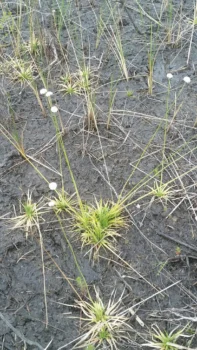
Flattened Pipewort: A Tiny Native Wonder for Wetland Gardens
If you’re looking to add some understated charm to your wetland garden or pond edge, flattened pipewort might just be the perfect little native you’ve never heard of. This petite perennial brings a delicate, almost ethereal quality to wet spaces with its grass-like foliage and tiny button flowers that seem to float on slender stems.
What Exactly Is Flattened Pipewort?
Flattened pipewort (Eriocaulon compressum) is a native perennial forb that belongs to a fascinating family of plants perfectly adapted to life in consistently wet conditions. Think of it as nature’s way of adding delicate texture to marshes, pond edges, and boggy areas. Unlike woody plants, this little guy stays herbaceous throughout its life, with all its growing points tucked safely at or below ground level.
This native beauty calls the southeastern United States home, naturally occurring across a impressive range from Delaware down to Florida and as far west as Texas. You’ll find it thriving in Alabama, Delaware, District of Columbia, Florida, Georgia, Louisiana, Maryland, Mississippi, New Jersey, North Carolina, South Carolina, Texas, and Virginia.
- Species observed
- No observations
Why Your Wetland Garden Needs This Native Gem
Here’s where flattened pipewort really shines – it’s what botanists call an obligate wetland plant across all regions where it grows. This means it’s practically guaranteed to thrive in those tricky wet spots where other plants might struggle or rot. If you’ve got a consistently soggy area in your landscape, this could be your new best friend.
The aesthetic appeal lies in its subtle beauty. Picture fine, grass-like leaves forming neat little tufts, topped with small white button-like flower heads that dance on thin stems in the slightest breeze. It’s not going to wow you with bold colors or massive blooms, but it brings a gentle, naturalistic quality that’s perfect for native plant enthusiasts who appreciate understated elegance.
Where Does Flattened Pipewort Fit in Your Landscape?
This specialized native is tailor-made for:
- Bog gardens and wetland restorations
- Pond margins and water garden edges
- Rain gardens with consistently moist conditions
- Native plant gardens focusing on wetland species
- Areas with seasonal flooding or poor drainage
Given its native range, flattened pipewort should perform well in USDA hardiness zones 6 through 10, though it’s most at home in the warmer southeastern zones where it naturally occurs.
Growing Flattened Pipewort Successfully
The key to success with this native is simple: keep it wet! Here’s what you need to know:
Light Requirements: Full sun to partial shade works well, though it tends to be most vigorous with good light exposure.
Soil Needs: Consistently moist to wet, acidic soils are essential. This isn’t a plant that tolerates drought – even brief dry spells can stress it significantly.
Planting Tips: Spring is typically the best time to establish new plants. Make sure your planting site stays consistently moist throughout the growing season.
Maintenance: Once established in appropriate conditions, flattened pipewort is refreshingly low-maintenance. The biggest challenge is usually ensuring adequate moisture rather than any intensive care requirements.
Is Flattened Pipewort Right for You?
Let’s be honest – this isn’t a plant for every garden. If you’re dealing with average garden soil or areas that dry out regularly, flattened pipewort probably isn’t your best choice. But if you have wet areas where you want to establish native plants, or if you’re creating a specialized wetland garden, this little beauty could be exactly what you’re looking for.
The wildlife benefits, while not extensively documented, likely include providing habitat for small wetland insects and contributing to the overall ecological health of wetland systems. Its small flowers may attract tiny pollinators, though it’s not going to be a major butterfly magnet.
Flattened pipewort represents the kind of specialized native plant that reminds us how diverse and adapted our local flora really is. While it may not be the showiest addition to your landscape, it brings authentic native character to wet sites and helps support the ecological integrity of wetland habitats – making it a worthy choice for dedicated native plant gardeners with the right growing conditions.