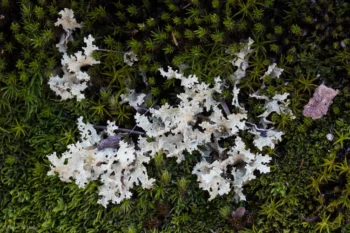
Flavocetraria nivalis: The Snow Lichen You’ll Spot in Wild Places
If you’ve ever wandered through pristine alpine meadows or Arctic tundra and noticed small, branching, whitish structures growing on rocks or soil, you might have encountered Flavocetraria nivalis. This fascinating organism isn’t a plant at all – it’s actually a lichen, which makes it quite different from the typical garden residents we usually discuss.
What Exactly Is Flavocetraria nivalis?
Flavocetraria nivalis, also known by its synonym Cetraria nivalis, is a fruticose lichen native to North America. Unlike plants, lichens are actually a partnership between fungi and algae (or sometimes cyanobacteria) living together in a mutually beneficial relationship. The fungal partner provides structure and protection, while the algae photosynthesizes to create food for both organisms.
This particular lichen forms small, branched, shrub-like structures that are typically whitish-gray to pale yellow in color. The branches are hollow and often have a somewhat papery texture, making them quite distinctive once you know what to look for.
Where Does Snow Lichen Grow?
Flavocetraria nivalis thrives in the harsh conditions of Arctic and alpine environments across North America. You’ll find it in Alaska, northern Canada, and at high elevations in western mountain ranges where few other organisms can survive the extreme cold and intense UV radiation.
Can You Grow Snow Lichen in Your Garden?
Here’s where things get interesting – and perhaps a bit disappointing for eager gardeners. Flavocetraria nivalis cannot be cultivated in traditional gardens or landscapes. This lichen requires very specific environmental conditions that are nearly impossible to replicate outside of its natural habitat:
- Extremely cold temperatures for much of the year
- Pristine air quality with minimal pollution
- Specific moisture cycles and humidity levels
- Particular soil chemistry and substrate requirements
- Intense UV radiation followed by long periods of darkness
Even if you live in a cold climate, attempting to introduce this lichen to your garden would likely result in failure and could potentially harm wild populations if collected from nature.
Is Snow Lichen Beneficial to Gardens?
While you can’t grow Flavocetraria nivalis in your garden, its presence in wild areas serves important ecological functions. Like other lichens, it helps prevent soil erosion, provides food for wildlife (particularly caribou and reindeer in Arctic regions), and serves as an indicator of air quality – lichens are extremely sensitive to air pollution.
If you’re interested in supporting lichen diversity in your area, focus on maintaining clean air quality and avoiding the use of harmful chemicals that might drift into natural areas where lichens grow.
How to Identify Flavocetraria nivalis in the Wild
If you’re hiking in alpine or Arctic regions, here’s what to look for:
- Small, branched structures 1-4 inches tall
- Whitish-gray to pale yellow coloration
- Hollow, somewhat papery branches
- Growing directly from soil or rock surfaces
- Found in areas with minimal vegetation
Remember to observe and photograph only – never collect lichens from the wild, as they grow extremely slowly and play crucial roles in their ecosystems.
The Bottom Line
Flavocetraria nivalis is a remarkable example of life thriving in extreme conditions, but it’s not destined for garden cultivation. Instead, appreciate this hardy lichen during wilderness adventures and support its conservation by advocating for clean air and pristine natural habitats. If you’re looking to add interesting, low-maintenance organisms to your garden, consider exploring native mosses or other plants that can actually thrive in cultivated settings.