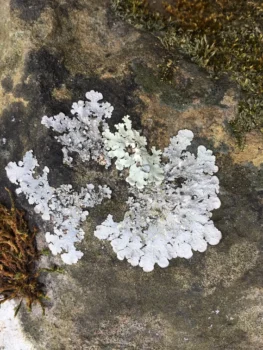
Flavoparmelia Lichen: The Quiet Garden Ally You Never Knew You Had
Have you ever noticed those grayish-green, leafy patches growing on tree bark in your yard and wondered what they were? Meet the flavoparmelia lichen (Flavoparmelia caperata), a fascinating organism that’s probably been quietly decorating your outdoor spaces without you even realizing it!
What Exactly Is Flavoparmelia Lichen?
Before we dive deeper, let’s clear up what this interesting organism actually is. Flavoparmelia lichen isn’t a plant at all—it’s a unique partnership between a fungus and an algae living together in perfect harmony. This biological collaboration creates what we see as those distinctive, flat, lobed structures that seem to paint themselves across tree bark and sometimes rocks.
This remarkable lichen is native to North America and has been quietly thriving in our ecosystems for centuries. You might also encounter it in scientific literature under several former names, including Parmelia caperata, but Flavoparmelia caperata is its current accepted scientific name.
Where You’ll Find This Natural Wonder
Flavoparmelia lichen has made itself at home across a broad swath of North America, spreading from the northern reaches of Canada down through the United States and into Mexico. It’s quite the traveler and adapts well to various climatic conditions.
Spotting Flavoparmelia Lichen in Your Garden
Identifying this lichen is easier than you might think once you know what to look for:
- Look for grayish-green, leaf-like lobes that form circular or irregular patches
- The surface appears somewhat wrinkled or textured, never completely smooth
- Patches typically range from a few inches to several inches across
- You’ll most commonly find it on tree bark, especially oak, maple, and other deciduous trees
- The edges of the lobes often appear slightly upturned or ruffled
Is It Beneficial for Your Garden?
Absolutely! While flavoparmelia lichen won’t attract butterflies or hummingbirds like flowering plants do, it serves as a wonderful indicator of environmental health. Here’s why you should appreciate having it around:
- It acts as a natural air quality monitor—lichens are sensitive to pollution, so their presence indicates cleaner air
- Adds subtle, natural texture and visual interest to tree bark and garden surfaces
- Provides microscopic habitat for tiny creatures in your garden’s ecosystem
- Contributes to the overall biodiversity of your outdoor space
- Requires absolutely no maintenance or care from you
The Hands-Off Approach to Growing Lichens
Here’s the beautiful thing about flavoparmelia lichen—you can’t really grow it in the traditional sense, and you don’t need to! This remarkable organism will appear naturally in your garden when conditions are just right. It thrives in areas with:
- Clean, unpolluted air
- Adequate moisture from rain and humidity
- Suitable surfaces like tree bark or stone
- Partial shade to filtered sunlight
The best thing you can do to encourage lichens in your garden is to maintain a healthy, chemical-free environment. Avoid using harsh pesticides or fungicides that might harm these delicate organisms.
A Living Decoration That Takes Care of Itself
Think of flavoparmelia lichen as nature’s own garden art—it adds character and authenticity to your outdoor space while asking for nothing in return. Unlike high-maintenance garden features, this lichen simply appears when your garden ecosystem is healthy and balanced.
If you’re lucky enough to spot flavoparmelia lichen in your yard, take a moment to appreciate this quiet garden resident. Its presence is actually a compliment to your gardening practices, indicating that you’re providing a clean, healthy environment where native organisms can flourish naturally.
So the next time you’re wandering through your garden, keep an eye out for those subtle grayish-green patches. You might just discover you have a whole community of these fascinating organisms already calling your outdoor space home!