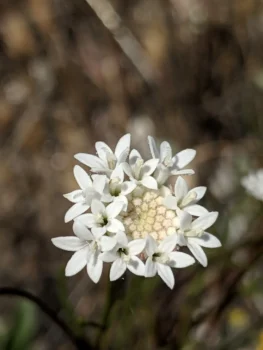
Fleshcolor Pincushion: A Charming Desert Native for Water-Wise Gardens
If you’re looking for a delightful little wildflower that practically takes care of itself, meet the fleshcolor pincushion (Chaenactis xantiana). Despite its somewhat unusual common name, this petite annual brings surprising charm to desert and drought-tolerant gardens across the American Southwest.
What Makes Fleshcolor Pincushion Special?
This native annual forb is a true child of the desert, perfectly adapted to thrive where many other plants struggle. As an herbaceous plant without woody stems, it completes its entire life cycle in one growing season, but what it lacks in longevity, it makes up for in resilience and understated beauty.
The fleshcolor pincushion produces small, daisy-like flowers with delicate white to pale pink petals that seem to glow against the often harsh desert landscape. Its compact, low-growing habit makes it an excellent choice for gardeners who appreciate plants that know their place and don’t try to take over the garden.
Where Does It Call Home?
As a native species to the lower 48 states, fleshcolor pincushion naturally occurs across Arizona, California, Nevada, and Oregon. It’s particularly well-suited to the desert and semi-arid regions of these states, where it has evolved to make the most of limited water resources.
- Species observed
- No observations
Why Gardeners Love (and Should Consider) This Plant
There are several compelling reasons to include fleshcolor pincushion in your landscape:
- Water-wise champion: Once established, it requires minimal irrigation, making it perfect for drought-tolerant gardens
- Pollinator magnet: The flowers attract native bees, butterflies, and other beneficial insects
- Low maintenance: Thrives in poor soils where other plants struggle
- Native credentials: Supporting local ecosystems by choosing plants that belong
- Natural look: Perfect for wildflower meadows and naturalized areas
Perfect Garden Settings
Fleshcolor pincushion shines in several garden styles:
- Desert and xeriscape gardens
- Wildflower meadows and naturalized areas
- Rock gardens and gravel gardens
- Native plant gardens
- Low-water landscapes
Its modest size and spreading habit make it an excellent ground cover choice, especially when planted in drifts for maximum visual impact.
Growing Conditions and Care
The beauty of fleshcolor pincushion lies in its simplicity. This plant thrives in conditions that would stress many garden favorites:
- Soil: Well-draining sandy or rocky soils; actually prefers poor soils over rich, amended ones
- Sun exposure: Full sun is essential for best flowering
- Water: Drought tolerant once established; overwatering can be more harmful than neglect
- Climate: Hardy in USDA zones 8-10
Planting and Care Tips
Getting fleshcolor pincushion established is refreshingly straightforward:
- Timing: Direct seed in fall for spring blooms
- Soil prep: Ensure excellent drainage; add sand or gravel if your soil is heavy
- Watering: Water lightly until germination, then reduce watering as plants establish
- Maintenance: Minimal care needed; avoid fertilizing as it prefers lean conditions
- Self-seeding: Allow some flowers to go to seed for natural reseeding
The Bottom Line
Fleshcolor pincushion proves that native doesn’t mean boring, and drought-tolerant doesn’t mean difficult. This charming annual offers gardeners in the Southwest a chance to create beautiful, sustainable landscapes that support local wildlife while requiring minimal inputs. Whether you’re designing a full xeriscape or just looking to add some native flair to a sunny corner, this unassuming wildflower deserves a spot in your garden planning.
For gardeners committed to water-wise landscaping and supporting native ecosystems, fleshcolor pincushion represents the perfect intersection of beauty, sustainability, and practicality.