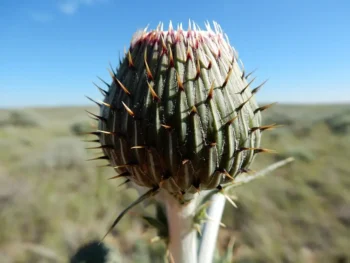
Flodman’s Thistle: A Prairie Native Worth Growing
If you’ve ever wondered about adding a touch of wild prairie beauty to your garden, let me introduce you to Flodman’s thistle (Cirsium flodmanii). This sturdy perennial might not have the flashiest name, but don’t let that fool you – this native gem has plenty to offer gardeners looking to create authentic prairie landscapes or support local wildlife.
What Is Flodman’s Thistle?
Flodman’s thistle is a perennial forb – basically a non-woody flowering plant that comes back year after year. As a member of the thistle family, it sports the characteristic spiny leaves and gorgeous purple-pink flower heads that make thistles so recognizable. But unlike some of its more aggressive cousins, this native species plays well with others in the garden ecosystem.
You might occasionally see this plant listed under its botanical synonyms, including Cirsium nebraskense var. discissum or Cirsium oblanceolatum, but Cirsium flodmanii is the accepted name botanists use today.
Where Does It Call Home?
This prairie native has an impressive range across North America. You’ll find Flodman’s thistle growing naturally from the Canadian provinces of Alberta, British Columbia, Manitoba, Ontario, Quebec, and Saskatchewan, down through much of the American Great Plains and into the mountain states. Its range includes Colorado, Idaho, Iowa, Kansas, Michigan, Minnesota, Montana, Nebraska, North Dakota, South Dakota, Utah, Vermont, Wisconsin, and Wyoming.
- Species observed
- No observations
Garden Appeal and Landscape Role
So why would you want to invite a thistle into your garden? For starters, Flodman’s thistle brings authentic prairie character to naturalized landscapes. Its purple-pink blooms appear in mid to late summer, providing color when many other prairie plants are winding down. The spiny, textured foliage adds visual interest throughout the growing season, creating a nice contrast to grasses and other smooth-leaved prairie plants.
This plant shines in:
- Prairie restoration projects
- Wildflower meadows
- Naturalized garden areas
- Wildlife-focused landscapes
- Low-maintenance native plantings
A Pollinator Magnet
Here’s where Flodman’s thistle really earns its keep: those showy flower heads are absolute magnets for pollinators. Butterflies, bees, and other beneficial insects flock to the nectar-rich blooms. If you’re trying to create a pollinator-friendly garden, this native thistle deserves serious consideration.
Growing Conditions and Hardiness
One of the best things about Flodman’s thistle is how low-maintenance it can be once established. This tough prairie native thrives in USDA hardiness zones 3 through 7, making it suitable for most temperate regions where it’s naturally found.
Give it:
- Full sun exposure
- Well-drained to dry soils
- Neutral to slightly alkaline soil pH
- Space to spread naturally
The plant’s facultative wetland status means it’s adaptable – while it can handle some moisture, it’s equally happy in drier conditions. Once established, it’s quite drought tolerant, making it perfect for low-water landscapes.
Planting and Care Tips
Starting Flodman’s thistle is straightforward, though it does require a bit of patience. The seeds need cold stratification to germinate properly, so fall seeding often works best – let winter do the work for you! You can also stratify seeds in the refrigerator for spring planting.
Here’s how to succeed:
- Direct seed in fall or early spring
- Barely cover seeds – they need light to germinate
- Keep soil moist until establishment
- Be patient – it may take a full season to see significant growth
- Once established, minimal care needed
Fair warning: like many thistles, this plant may self-seed. In a prairie or naturalized setting, that’s often a bonus. In more formal gardens, you might want to deadhead spent flowers if you prefer more control over its spread.
Is Flodman’s Thistle Right for Your Garden?
This native thistle is an excellent choice if you’re creating prairie-style landscapes, want to support local pollinators, or simply appreciate the wild beauty of native plants. Its adaptability to various moisture conditions and low maintenance requirements make it particularly appealing for sustainable gardening approaches.
However, it might not be the best fit for formal, manicured landscapes where its naturalized growth habit and potential for self-seeding could clash with your design goals. Consider your garden style and maintenance preferences before planting.
Overall, Flodman’s thistle offers gardeners a chance to grow a piece of authentic North American prairie while supporting the native wildlife that depends on these plant communities. Sometimes the most rewarding garden additions are the ones that connect us to the natural heritage of our regions – and this unassuming thistle does exactly that.