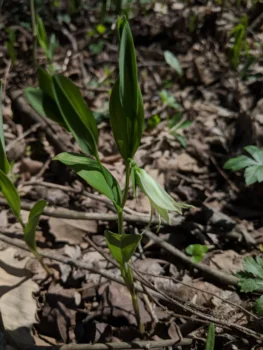
Florida Bellwort: A Rare Gem for Southeastern Shade Gardens
If you’re looking to add a touch of delicate spring beauty to your woodland garden, Florida bellwort might just be the hidden treasure you’ve been seeking. This charming native perennial brings graceful yellow blooms to shady corners of southeastern gardens, though its rarity makes it a special find indeed.
Meet the Florida Bellwort
Florida bellwort (Uvularia floridana) is a native perennial herb that calls the southeastern United States home. You might occasionally see it listed under its scientific synonym Oakesiella floridana, but don’t let that confuse you – it’s the same lovely plant. This herbaceous perennial belongs to the group of plants we call forbs, meaning it’s a non-woody flowering plant that dies back to the ground each winter and returns each spring.
Where Does It Grow Naturally?
This southeastern native has a relatively limited natural range, growing wild in Alabama, Florida, Georgia, Mississippi, and South Carolina. It’s particularly at home in the Atlantic and Gulf Coastal Plain regions, where it thrives in the moist, shaded conditions of woodland understories.
- Species observed
- No observations
A Word About Rarity
Here’s something important every gardener should know: Florida bellwort is considered vulnerable, with a global conservation status that indicates it’s at risk. In Alabama and Florida, it’s particularly rare. If you’re interested in growing this beauty, please make sure you source it responsibly from reputable native plant nurseries or propagators – never collect it from the wild. By choosing nursery-grown plants, you’re helping protect wild populations while still enjoying this special native in your own garden.
Why Grow Florida Bellwort?
Despite its rarity concerns, there are compelling reasons to consider adding Florida bellwort to your garden:
- Native Beauty: Those delicate, drooping yellow bell-shaped flowers create an enchanting display in early spring
- Pollinator Support: Early spring blooms provide nectar for native bees and other pollinators when few other flowers are available
- Low Maintenance: Once established, it requires minimal care
- Woodland Character: Adds authentic native character to shade gardens and naturalized areas
- Conservation Value: Growing it helps preserve genetic diversity of this vulnerable species
Perfect Garden Settings
Florida bellwort shines in woodland gardens, native plant collections, and naturalized shade areas. It’s particularly well-suited for:
- Understory plantings beneath native trees
- Shade gardens with consistent moisture
- Native plant gardens focusing on southeastern species
- Naturalized areas that mimic woodland environments
Growing Conditions and Care
Success with Florida bellwort comes down to mimicking its natural woodland habitat. Here’s what it needs:
Light: Partial to full shade – think dappled sunlight or the conditions you’d find under a forest canopy.
Soil: Moist to wet, well-draining soil with plenty of organic matter. It naturally grows in facultative wetland conditions, meaning it usually occurs in wetlands but can tolerate some drier periods.
Water: Consistent moisture is key, especially during the growing season. Don’t let it completely dry out.
Hardiness: Hardy in USDA zones 8-10, which aligns perfectly with its native southeastern range.
Planting and Care Tips
Getting Florida bellwort established in your garden requires a gentle approach:
- Soil Preparation: Amend your planting area with compost or leaf mold to improve organic content and moisture retention
- Planting Time: Fall planting allows roots to establish before spring growth
- Spacing: Give plants adequate space to naturalize – they’ll slowly spread to form colonies over time
- Mulching: A layer of organic mulch helps retain moisture and suppress weeds
- Patience: Like many native perennials, it may take a couple of seasons to become fully established
The Bottom Line
Florida bellwort offers southeastern gardeners a chance to grow a truly special native plant while contributing to conservation efforts. Its delicate spring blooms and easy-care nature make it a worthwhile addition to appropriate gardens, but remember – only plant responsibly sourced specimens. If you can provide the moist, shady conditions it craves and you’re committed to supporting native plant conservation, Florida bellwort could become a cherished part of your woodland garden story.
By choosing to grow rare natives like Florida bellwort, you’re not just creating a beautiful garden – you’re becoming a steward of our natural heritage.