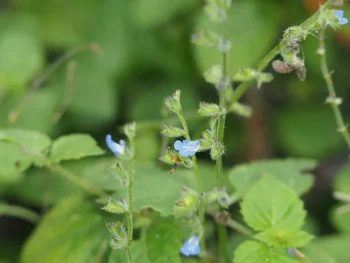
Florida Keys Sage: A Mysterious Native Beauty for Florida Gardens
Meet Florida Keys sage (Salvia riparia), one of Florida’s more elusive native plants that’s sure to intrigue any gardener with a passion for rare natives. This perennial herb belongs to the beloved sage family, but unlike its more famous cousins, this particular species keeps a pretty low profile in both the wild and in cultivation.
What Makes Florida Keys Sage Special?
Florida Keys sage is a true Florida native, found exclusively in the Sunshine State. As a perennial forb, it’s an herbaceous plant that lacks woody stems but returns year after year. The species name riparia gives us a big clue about where this plant likes to hang out – it’s derived from the Latin word for riverbank, suggesting this sage has a thing for waterside locations.
This sage is also known by the botanical synonym Salvia privoides, though you’re most likely to encounter it under its current accepted name, Salvia riparia.
Where Does Florida Keys Sage Grow?
This native beauty calls Florida home, and only Florida. Its limited geographic range makes it a special addition to native plant gardens for those lucky enough to find it or grow it successfully.
- Species observed
- No observations
Should You Plant Florida Keys Sage?
Here’s where things get a bit tricky. While Florida Keys sage is undoubtedly a fascinating native plant that would make a wonderful addition to any Florida native garden, finding reliable information about its specific growing requirements is quite challenging. This scarcity of cultivation information likely reflects the plant’s rarity in both wild populations and nursery trade.
If you’re a dedicated native plant enthusiast in Florida, this species could be worth seeking out, but you’ll need to be prepared for some trial and error in figuring out its preferences.
Growing Conditions and Care
Based on its riparian nature and Florida origins, Florida Keys sage likely prefers:
- Consistently moist to wet soil conditions
- USDA hardiness zones 9-11 (typical for Florida natives)
- Partial shade to full sun exposure
- Native Florida soil types
As with many Salvia species, it may provide benefits to pollinators like bees and butterflies, though specific pollinator relationships for this species haven’t been well documented.
The Challenge of Growing Florida Keys Sage
The biggest hurdle you’ll face with Florida Keys sage is simply finding it. This isn’t a plant you’ll likely stumble across at your local nursery. If you do manage to locate seeds or plants, make sure they’re from reputable sources that ethically collect or propagate native Florida plants.
Given the limited cultivation information available, growing this species successfully may require some detective work on your part. Start with conditions similar to other moisture-loving Florida natives and adjust based on how your plant responds.
Alternatives to Consider
If you’re drawn to the idea of native sages but can’t locate Florida Keys sage, consider these more readily available Florida natives:
- Tropical sage (Salvia coccinea) – widely available and loved by hummingbirds
- Lyreleaf sage (Salvia lyrata) – beautiful spring bloomer
- Other native Salvia species suited to your specific region of Florida
The Bottom Line
Florida Keys sage represents one of those intriguing native plants that captures the imagination of serious native plant gardeners. While growing it successfully may require patience and experimentation, the reward of cultivating such a unique Florida endemic could be well worth the effort. Just remember that with rare natives comes responsibility – always source your plants ethically and consider contributing to our collective knowledge by documenting your growing experiences.
If you do decide to take on the challenge of growing Florida Keys sage, you’ll be joining a small but dedicated group of gardeners helping to preserve and understand Florida’s unique native plant heritage.