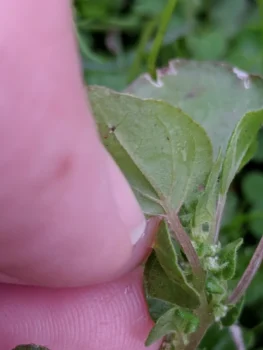
Florida Pellitory: The Humble Native You Probably Don’t Want to Plant
Meet Florida pellitory (Parietaria floridana), a plant that’s about as unassuming as they come. This little native might not win any beauty contests, but it’s got some interesting qualities that are worth understanding – even if you’re probably not going to rush out and add it to your garden wishlist.
What Exactly Is Florida Pellitory?
Florida pellitory is a native annual forb that belongs to the nettle family, though thankfully without the sting. It’s a low-growing herbaceous plant that typically pops up in disturbed areas, along pathways, and sometimes in gardens where it wasn’t exactly invited. You might also see it listed under its botanical synonyms Parietaria debilis or Parietaria nummularia in older gardening references.
Where Does It Call Home?
This native plant has quite an impressive range across the southeastern United States. You’ll find Florida pellitory growing naturally in Alabama, Arkansas, Delaware, Florida, Georgia, Kentucky, Louisiana, Maryland, Mississippi, New Hampshire, North Carolina, South Carolina, and Texas. It’s particularly well-established in the Atlantic and Gulf Coastal Plains.
- Species observed
- No observations
The Honest Truth About Its Looks
Let’s be real – Florida pellitory isn’t going to be the star of your garden show. This small annual produces tiny, inconspicuous greenish flowers that most people wouldn’t even notice. The plant stays fairly low to the ground and has a somewhat weedy appearance that screams I’m here whether you like it or not.
Should You Plant Florida Pellitory?
Here’s where things get interesting. While Florida pellitory is undeniably native and has every right to be in our landscapes, it’s not typically something you’d intentionally plant. Here’s why:
- Minimal ornamental value – it’s just not much to look at
- Often considered a garden weed rather than a desirable plant
- Limited wildlife benefits since it’s wind-pollinated
- Tends to self-seed and can spread where you might not want it
However, if you’re creating a truly wild, naturalistic space or working on habitat restoration, this little native does have its place in the ecosystem.
Growing Conditions and Care
If Florida pellitory does show up in your garden (and it might, whether you plant it or not), here’s what it prefers:
- Climate: Thrives in USDA hardiness zones 8-10
- Light: Partial shade to full sun
- Soil: Not picky – tolerates various soil types
- Water: Adaptable to both moist and moderately dry conditions
- Wetland status: Facultative in most regions, meaning it can handle both wet and dry sites
As an annual, Florida pellitory completes its entire life cycle in one growing season, then relies on seeds to continue the population the following year.
The Bottom Line
Florida pellitory is one of those plants that’s perfectly fine in its natural habitat but probably not something you’d choose for a designed landscape. If you’re looking for native plants that offer more visual appeal and wildlife benefits, consider alternatives like wild bergamot, black-eyed Susan, or native asters instead.
That said, if Florida pellitory decides to make itself at home in a wild corner of your property, you can appreciate it for what it is – a humble native that’s been quietly doing its thing in American landscapes for centuries. Sometimes the most unremarkable plants teach us the most about accepting nature on its own terms.