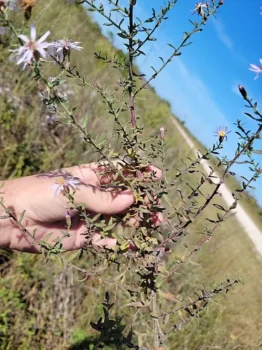
Florida Water Aster: A Rare Native Gem for Wetland Gardens
If you’re a Florida gardener looking to add authentic native beauty to your wetland garden or rain garden, meet the Florida water aster (Symphyotrichum fontinale). This charming perennial might not be a household name, but it deserves a spot on every native plant enthusiast’s radar – with a few important caveats we’ll discuss.
What Makes Florida Water Aster Special?
The Florida water aster is a true Florida original, found nowhere else in the world except the Sunshine State. As its name suggests, this delicate forb has a particular fondness for water, making it a perfect candidate for those tricky wet spots in your landscape where other plants might struggle.
Don’t let the technical term forb intimidate you – it simply means this is a soft-stemmed perennial without woody growth, similar to other herbaceous flowers you might know and love. Think of it as nature’s way of creating a plant that’s tough enough to handle Florida’s wet seasons but delicate enough to produce beautiful blooms.
Where Does It Grow?
This native beauty calls only Florida home, making it a true endemic species. You’ll find it naturally occurring in wetlands, marshes, and other moist habitats throughout the state.
- Species observed
- No observations
A Word About Rarity
Here’s where we need to have an important conversation. The Florida water aster has a conservation status of S2S4, which means it’s considered uncommon to fairly common, but its limited range makes it a species of concern. If you’re interested in growing this native gem, please make sure you source it from reputable native plant nurseries that propagate their own stock rather than wild-collecting.
This isn’t just about being a responsible gardener – it’s about protecting a plant that exists nowhere else on Earth.
Garden Appeal and Design Uses
The Florida water aster brings understated elegance to the garden with its small, daisy-like flowers that typically appear in white to pale purple. While it may not be the showiest plant in your garden, it offers that natural, relaxed look that’s perfect for:
- Wetland restoration projects
- Rain gardens and bioswales
- Native plant gardens
- Naturalized landscape areas
- Conservation-minded landscapes
Pollinator and Wildlife Benefits
Like its aster cousins, the Florida water aster is a pollinator magnet. Native bees, butterflies, and other beneficial insects are drawn to its blooms, making it an excellent choice for supporting local ecosystem health. This is especially important given Florida’s role as a critical corridor for migrating butterflies and resident native pollinators.
Growing Conditions
The Florida water aster is relatively straightforward to grow if you can meet its basic needs:
- Moisture: This plant lives up to its water aster name – it needs consistently moist to wet soil conditions
- Light: Full sun to partial shade (it’s quite adaptable in this regard)
- Climate: USDA hardiness zones 8-10, making it suitable throughout Florida
- Soil: Adaptable to various soil types as long as moisture needs are met
Planting and Care Tips
Once established, the Florida water aster is refreshingly low-maintenance. Here are some tips for success:
- Plant in spring or fall for best establishment
- Ensure consistent moisture – this isn’t a plant for xeriscaping
- Mulch around the base to help retain moisture
- Allow it to naturalize in appropriate areas
- Minimal fertilization needed – native plants typically thrive without heavy feeding
The Bottom Line
Should you plant Florida water aster? If you’re a Florida gardener with suitable wet conditions and a commitment to supporting native biodiversity, absolutely – but only if you can source it responsibly. This rare native offers a unique opportunity to grow something truly special while supporting local ecosystems.
However, if you don’t have the right conditions (particularly adequate moisture) or can’t find responsibly sourced plants, consider other native Florida asters like aromatic aster (Symphyotrichum oblongifolium) or fall-flowering aster (Symphyotrichum oblongifolium) that might be more readily available and better suited to drier conditions.
The Florida water aster reminds us that sometimes the most valuable garden additions aren’t the flashiest – they’re the ones that connect us most deeply to the unique natural heritage of our local landscape.