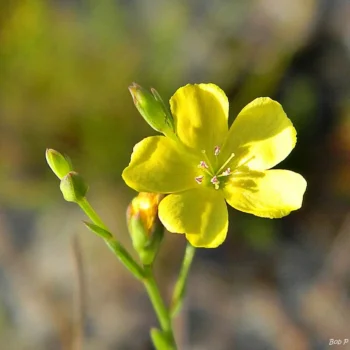
Florida Yellow Flax: A Cheerful Native Wildflower for Easy-Care Gardens
If you’re looking for a native wildflower that’s as easygoing as it is charming, Florida yellow flax (Linum floridanum) might just become your new garden favorite. This delightful perennial forb brings months of sunny yellow blooms to gardens across the southeastern United States, and it does so with remarkably little fuss from the gardener.
What is Florida Yellow Flax?
Florida yellow flax is a native perennial wildflower that belongs to the flax family. As a forb—basically a non-woody flowering plant—it grows as a herbaceous perennial that dies back to the ground each winter and returns with fresh growth in spring. Don’t let its delicate appearance fool you; this little powerhouse is tougher than it looks and incredibly adaptable to various growing conditions.
Where Does Florida Yellow Flax Grow Naturally?
This native beauty calls the southeastern United States home, naturally occurring in Alabama, District of Columbia, Florida, Georgia, Illinois, Louisiana, Maryland, Mississippi, New Jersey, North Carolina, South Carolina, Tennessee, Texas, and Virginia. Its wide native range speaks to its adaptability and resilience.
- Species observed
- No observations
Why Plant Florida Yellow Flax in Your Garden?
There are plenty of reasons to fall in love with Florida yellow flax:
- Native plant benefits: As a native species, it supports local ecosystems and requires fewer resources than non-native alternatives
- Long blooming period: Enjoy bright yellow flowers from spring through fall
- Pollinator magnet: Small bees, butterflies, and other beneficial insects love these cheerful blooms
- Low maintenance: Once established, it’s remarkably drought tolerant and self-sufficient
- Versatile growing conditions: Adapts to both wet and dry sites, making it perfect for various garden situations
- Self-seeding: Creates naturalized colonies over time without becoming invasive
Appearance and Garden Role
Florida yellow flax typically grows 1-3 feet tall with a somewhat spreading habit. Its narrow, delicate leaves create a fine texture that contrasts beautifully with broader-leafed plants. The star of the show, however, is the abundance of small, bright yellow, five-petaled flowers that seem to glow in the garden.
In garden design, this plant excels as:
- Ground cover in naturalized areas
- Border plants along paths or garden edges
- Components in wildflower meadow mixes
- Texture plants in native plant gardens
- Rain garden residents due to their wetland tolerance
Growing Conditions and Care
One of the best things about Florida yellow flax is how accommodating it is. This adaptable native thrives in USDA hardiness zones 6-9 and tolerates a wide range of conditions:
- Light: Full sun to partial shade (though more sun means more flowers)
- Soil: Adaptable to various soil types including sandy, clay, and everything in between
- Moisture: Facultative wetland status means it’s equally happy in moist or dry conditions
- pH: Tolerates a range of soil pH levels
Planting and Maintenance Tips
Growing Florida yellow flax is refreshingly straightforward:
- Starting from seed: Direct sow in fall or early spring; seeds need light to germinate, so barely cover them
- Spacing: Allow 12-18 inches between plants for good air circulation
- Watering: Water regularly the first year to establish roots, then reduce frequency as plants become drought tolerant
- Fertilizing: Generally unnecessary; native plants prefer lean soils
- Deadheading: Optional—remove spent flowers for continuous blooming or leave them for self-seeding
- Winter care: Simply cut back dead foliage in late fall or early spring
Perfect Garden Companions
Florida yellow flax plays well with other native plants. Consider pairing it with native grasses, purple coneflowers, black-eyed Susans, or other regional wildflowers for a stunning native plant display that benefits local wildlife while creating a beautiful, low-maintenance garden.
The Bottom Line
Florida yellow flax proves that native doesn’t mean boring. This charming wildflower offers months of cheerful blooms, supports local pollinators, and asks for very little in return. Whether you’re creating a naturalized meadow, adding interest to a rain garden, or simply want a reliable perennial that celebrates your region’s natural heritage, Florida yellow flax delivers beauty with purpose. Plus, with its self-seeding habit, you’ll likely find pleasant surprises popping up in new spots—nature’s way of saying thank you for choosing native.