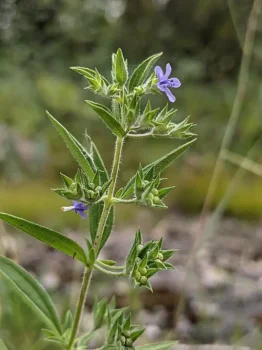
Fluxweed: A Native Annual Worth Discovering
If you’re looking to add a touch of delicate charm to your native plant garden, let me introduce you to fluxweed (Trichostema brachiatum). This unassuming annual might not be the showiest flower in your garden, but it’s got character and plays an important role in supporting our native ecosystems.
What is Fluxweed?
Fluxweed is a native North American annual that belongs to the mint family, though it’s quite different from the mints you might know. As a forb (that’s botanist-speak for a non-woody flowering plant), it develops fresh from seed each year, completing its entire life cycle in a single growing season. The plant produces small, tubular flowers that range from blue to purple, and like many of its mint family relatives, it has aromatic foliage that releases a pleasant scent when brushed against.
Where Does Fluxweed Grow Naturally?
This native beauty has quite an impressive range! Fluxweed naturally occurs across much of North America, calling both Canada and the lower 48 states home. You can find it growing wild in states stretching from Maine down to Florida, and from the Atlantic coast all the way west to Arizona and New Mexico. It’s truly a continental native, adapted to a wide variety of conditions across Alabama, Arizona, Arkansas, Connecticut, Florida, Georgia, Illinois, Indiana, Iowa, Kansas, Kentucky, Louisiana, Maryland, Massachusetts, Michigan, Minnesota, Mississippi, Missouri, Nebraska, New Jersey, New Mexico, New York, North Carolina, Ohio, Oklahoma, Pennsylvania, South Carolina, South Dakota, Tennessee, Texas, Vermont, Virginia, West Virginia, and Wisconsin, plus Ontario and Quebec in Canada.
- Species observed
- No observations
A Word About Conservation
Here’s something important to know: while fluxweed has a broad natural range, it’s actually quite rare in some areas. In New Jersey, for example, it’s listed as endangered and is specially protected in both the Pinelands and Highlands regions. If you live in an area where fluxweed is rare, this makes it even more special to grow – but please make sure you source your seeds responsibly from reputable native plant suppliers rather than collecting from wild populations.
Why Grow Fluxweed in Your Garden?
You might be wondering why you’d want to invite an annual with such a humble appearance into your garden. Here’s the thing – fluxweed is a pollinator magnet! Those small flowers might look modest to us, but they’re perfectly designed to attract native bees, butterflies, and other beneficial insects. As an annual, it also fills in gaps in your garden naturally, popping up where conditions are right and helping create that relaxed, naturalized look that makes native gardens so appealing.
Fluxweed works beautifully in:
- Prairie and meadow gardens
- Naturalized landscape areas
- Pollinator gardens
- Low-maintenance native plant beds
- Areas where you want seasonal color without long-term commitment
Growing Conditions and Care
One of the best things about fluxweed is that it’s refreshingly low-maintenance. This adaptable annual thrives in full sun to partial shade and isn’t particularly fussy about soil type, as long as it drains well. Once established, it’s quite drought-tolerant – a trait that makes it perfect for sustainable gardening practices.
Since it’s an annual, fluxweed grows across USDA hardiness zones 3-9, adapting its growing season to local conditions. In cooler climates, it completes its cycle during the warmer months, while in milder areas, it might even germinate in fall and overwinter as small plants.
Planting and Establishing Fluxweed
Growing fluxweed is wonderfully straightforward – nature designed this plant to be self-sufficient! The easiest approach is direct seeding, either in fall or early spring. Fall seeding often works particularly well because it mimics the plant’s natural cycle, with seeds experiencing winter’s cold treatment and germinating when conditions are right in spring.
Here are some simple tips for success:
- Scatter seeds in areas where you want naturalized growth
- Don’t bury seeds deeply – just press them lightly into the soil surface
- Be patient – germination can be irregular, with some seeds sprouting immediately and others waiting for ideal conditions
- Once established, let some plants go to seed to ensure future generations
- Avoid over-watering or over-fertilizing, which can actually harm this adapted native
The Bottom Line
Fluxweed might not be the flashiest plant in the native gardening world, but it’s exactly the kind of unsung hero that makes ecosystems work. By providing nectar for pollinators, adapting to various growing conditions, and maintaining genetic diversity across its wide range, this little annual punches well above its weight in ecological value. Plus, there’s something deeply satisfying about growing a plant that’s been quietly supporting North American wildlife for thousands of years.
If you’re building a native garden or just want to support local pollinators, consider giving fluxweed a try. Your garden – and the bees – will thank you for it!