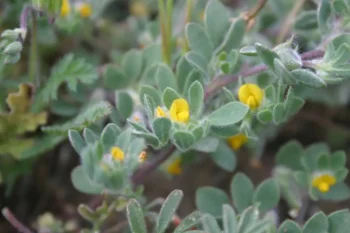
Foothill Deervetch: A Hardy Native Groundcover for Western Gardens
If you’re looking for a low-maintenance native plant that can handle tough growing conditions while supporting local wildlife, foothill deervetch (Lotus humistratus) might just be your new garden hero. This unassuming annual legume may not win any flashy flower contests, but it more than makes up for it with its resilience and ecological benefits.
Meet the Foothill Deervetch
Foothill deervetch is a native annual forb that belongs to the pea family, which means it has that characteristic compound leaf structure and small, cheerful yellow flowers. As a forb, it’s an herbaceous plant without woody stems—think of it as nature’s carpet rather than furniture. This hardy little plant has been quietly doing its job across the American West for centuries, and it’s ready to do the same in your garden.
You might also see this plant listed under its botanical synonym Hosackia brachycarpa, but don’t let the name confusion fool you—it’s the same reliable performer either way.
Where Does It Call Home?
This native beauty has quite an impressive range across the western United States. You’ll find foothill deervetch naturally growing in Arizona, California, Idaho, Nevada, New Mexico, Oregon, Texas, and Utah. It’s particularly well-adapted to the foothill regions (hence the name!) where it thrives in the challenging conditions between valleys and mountains.
- Species observed
- No observations
Why Your Garden Will Love Foothill Deervetch
Here’s where this plant really shines as a garden addition:
- Drought tolerance: Once established, it can handle dry conditions like a champ
- Soil improvement: As a legume, it fixes nitrogen in the soil, basically giving your other plants a natural fertilizer boost
- Low maintenance: This is definitely a plant it and forget it kind of species
- Erosion control: Its low-growing habit helps stabilize soil on slopes
- Pollinator support: The small yellow flowers attract native bees and other beneficial insects
Perfect Garden Spots
Foothill deervetch works beautifully in several garden settings:
- Native plant gardens where you want authentic regional flora
- Wildflower meadows for a natural, informal look
- Slope plantings where erosion control is needed
- Low-water landscapes and xeriscapes
- Areas where you want groundcover that doesn’t require regular watering
Growing Conditions That Make It Happy
The beauty of foothill deervetch lies in its simplicity. This plant thrives in USDA hardiness zones 8-10, making it perfect for warmer western climates. It prefers:
- Full sun exposure (6+ hours of direct sunlight daily)
- Well-draining soil (it doesn’t like wet feet)
- Minimal water once established
- Poor to moderate soil fertility (too much richness can actually reduce flowering)
Planting and Care Tips
Getting foothill deervetch established is refreshingly straightforward:
- Timing: Direct seed in fall for best results, allowing natural winter stratification
- Soil prep: Light cultivation is enough—don’t overwork the soil
- Seeding: Scatter seeds and barely cover with soil
- Watering: Provide light irrigation until germination, then gradually reduce
- Maintenance: Essentially none once established—maybe an occasional weeding in the first year
The Bottom Line
Foothill deervetch may not be the showiest plant in your garden, but it’s certainly one of the most reliable. If you’re gardening in its native range and want a plant that supports local ecosystems while requiring minimal input from you, this little legume deserves serious consideration. It’s particularly valuable for gardeners who want to create habitat for native pollinators without the fuss of high-maintenance plantings.
Just remember: as an annual, you’ll need to let it self-seed or replant each year. But given how easy it is to grow, that’s hardly a burden—it’s more like having a reliable friend who always shows up when you need them.