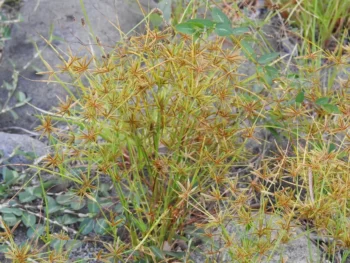
Foothill Flatsedge: A Modest Native Sedge for Desert Gardens
If you’re looking for a low-key native plant that won’t steal the spotlight but will quietly do its job in your southwestern garden, meet foothill flatsedge (Cyperus amabilis). This unassuming little sedge might not win any beauty contests, but it has its own subtle charm and plays an important role in native ecosystems.
What Is Foothill Flatsedge?
Foothill flatsedge is an annual sedge native to the southwestern United States. Like other members of the sedge family, it’s a grass-like plant that forms part of the diverse understory in desert and semi-desert regions. While it may look like grass to the casual observer, sedges have their own distinct characteristics that set them apart from true grasses.
This plant is also known by the synonym Cyperus amabilis var. macrostachyus, though the straight species name is most commonly used.
Where Does It Grow?
As a native species to the lower 48 states, foothill flatsedge has a rather limited natural range, primarily found in Arizona. Its common name gives us a clue about its preferred habitat – those foothill areas where desert meets slightly higher elevation terrain.
- Species observed
- No observations
Growing Conditions and Garden Use
Foothill flatsedge is classified as facultative upland in the Arid West, which means it usually grows in non-wetland areas but can occasionally tolerate some moisture. This makes it quite adaptable for desert gardening situations.
Here’s what we know about growing this native sedge:
- Thrives in arid to semi-arid conditions
- Prefers well-draining soils typical of desert environments
- Drought-tolerant once established
- Annual growth habit means it completes its life cycle in one growing season
- Low-maintenance once you understand its needs
Is Foothill Flatsedge Right for Your Garden?
This sedge works best in specific garden situations. Consider planting foothill flatsedge if you:
- Live in Arizona or similar southwestern climates
- Want to create authentic native plant communities
- Are developing a naturalistic or xeriscaped garden
- Need ground-level plants that require minimal water
- Appreciate subtle, understated plants over flashy showstoppers
However, this might not be the best choice if you’re looking for:
- A dramatic focal point or specimen plant
- Long-lived perennial structure in your garden
- Plants with showy flowers or colorful foliage
- High wildlife value for pollinators (sedges are wind-pollinated)
The Reality Check
Let’s be honest – foothill flatsedge isn’t going to transform your garden into a showstopper. It’s one of those quiet, background players that contributes to the overall ecosystem without demanding attention. As an annual, you’ll need to allow it to self-seed or replant each year to maintain its presence.
The limited information available about this species also means you’ll be somewhat pioneering if you choose to grow it. This can be exciting for plant enthusiasts who enjoy working with lesser-known natives, but it might be frustrating if you prefer well-documented plants with established growing guides.
Planting and Care Tips
While specific cultivation information for foothill flatsedge is limited, here are some general guidelines based on its native habitat and related species:
- Plant seeds in fall or early spring when natural moisture is more available
- Choose a location with full sun to partial shade
- Ensure good drainage – soggy soils will likely cause problems
- Once established, avoid overwatering
- Allow plants to set seed if you want them to return next year
- Minimal fertilization needed – these plants are adapted to lean soils
The Bottom Line
Foothill flatsedge represents the quieter side of native gardening – the plants that might not grab headlines but play crucial roles in their natural ecosystems. If you’re committed to authentic southwestern native gardening and appreciate subtle beauty, this little sedge could find a place in your landscape. Just don’t expect it to be the star of the show, and be prepared to work with limited growing information as you learn what works best in your specific garden conditions.
For gardeners seeking more dramatic or well-documented native alternatives, consider other southwestern natives like desert marigold, fairy duster, or brittlebush, which offer more reliable growing information and greater visual impact.