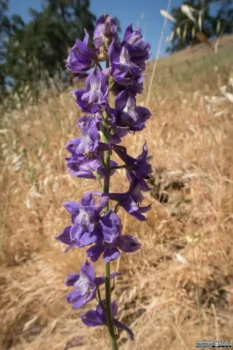
Foothill Larkspur: A California Native with Spectacular Spikes
If you’re looking to add some serious vertical drama to your California native garden, foothill larkspur (Delphinium hesperium) might just be your new best friend. This perennial wildflower brings all the classic delphinium charm—those gorgeous towering flower spikes—while being perfectly adapted to California’s unique climate and conditions.
What Makes Foothill Larkspur Special
Foothill larkspur is a true California native, found exclusively in the Golden State’s foothill regions. As a herbaceous perennial forb, it dies back to the ground each year but returns reliably from its root system. What sets this beauty apart from its garden center cousins is its remarkable adaptation to California’s Mediterranean climate, including those long, dry summers that can stress out many other delphinium varieties.
Where Does It Grow Naturally
This lovely native calls California home, specifically thriving in the state’s foothill regions where it has evolved alongside other native plants and wildlife. You’ll find it growing naturally in areas that experience California’s distinctive wet winters and dry summers.
- Species observed
- No observations
Garden Appeal and Design Role
Foothill larkspur serves as an excellent vertical accent in native plant gardens and Mediterranean-style landscapes. Its tall flower spikes create stunning back-of-border displays and work beautifully in wildflower meadow settings. The classic delphinium form—with its distinctive spurred flowers arranged on tall racemes—adds that cottage garden charm while supporting local ecosystems.
Perfect Garden Matches
This native beauty shines brightest in:
- California native plant gardens
- Mediterranean-style landscapes
- Wildflower meadows and naturalized areas
- Water-wise xerophytic gardens
- Pollinator gardens focused on native species
Wildlife and Pollinator Benefits
Here’s where foothill larkspur really earns its keep in the garden! Those beautiful blue to purple flowers are absolute magnets for hummingbirds, who love to visit the nectar-rich spurred blooms. Native bees also find this plant irresistible, making it a valuable addition to any pollinator-friendly landscape.
Growing Conditions and Care
The beauty of growing a true California native like foothill larkspur is that it actually wants the conditions your garden naturally provides. Here’s what it loves:
- Sunlight: Full sun to partial shade
- Soil: Well-draining soil is essential—soggy conditions are a no-go
- Water: Drought-tolerant once established, minimal summer water needed
- Climate: Thrives in USDA hardiness zones 8-10
Planting and Care Tips
Getting foothill larkspur established is pretty straightforward if you work with its natural rhythms:
- Plant in fall: This gives the plant time to establish before the growing season
- Respect its dormancy: Don’t panic when it dies back—this is totally normal
- Go easy on summer water: Once established, it prefers to stay on the dry side during summer months
- Choose your spot wisely: Good drainage is non-negotiable
Special Considerations
Foothill larkspur has a facultative wetland status, meaning it can handle both wet and dry conditions, though it clearly prefers the drier side once established. This flexibility makes it a great choice for gardens with varying moisture levels or areas that might get occasional winter flooding but dry out in summer.
Should You Plant Foothill Larkspur
If you’re gardening in California and want to support local ecosystems while enjoying spectacular flowers, foothill larkspur is definitely worth considering. It’s low-maintenance once established, supports important pollinators like hummingbirds and native bees, and brings that classic delphinium elegance without the fuss of non-native varieties that struggle in California’s climate.
The main things to consider are whether you have well-draining soil and can resist the urge to overwater during its summer dormancy. If you can meet these simple requirements, you’ll be rewarded with beautiful native blooms and the satisfaction of growing a plant that truly belongs in your California landscape.