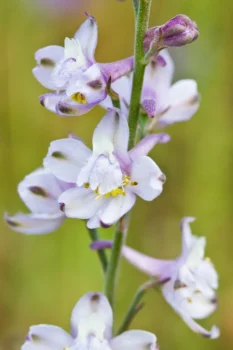
Foothill Larkspur: A Rare California Native Worth Getting to Know
If you’re passionate about California native plants and love the idea of adding something truly special to your garden, foothill larkspur (Delphinium hesperium pallescens) might catch your eye. This perennial wildflower is one of those plants that makes you feel like you’re in on a well-kept secret – but there are some important things to know before you start planning where to plant it.
What Makes Foothill Larkspur Special
Foothill larkspur is a native California perennial that belongs to the forb family – essentially, it’s a soft-stemmed herbaceous plant without the woody tissue you’d find in shrubs or trees. Like other members of the Delphinium family, it likely produces those distinctive spurred flowers that make larkspurs so beloved by gardeners and pollinators alike.
What sets this plant apart is its rarity. With a conservation status of S4T3?, foothill larkspur exists in that uncertain territory where we’re not entirely sure about its population stability. This makes it both intriguing and something to approach thoughtfully.
Where Does It Come From?
This California endemic calls the Golden State home, though specific details about its exact range within California remain limited in available research. As a native species, it has evolved alongside California’s unique climate patterns and soil conditions, making it potentially well-adapted to gardens that mimic its natural habitat.
- Species observed
- No observations
Should You Plant Foothill Larkspur?
Here’s where things get interesting – and where responsible gardening comes into play. Because of its uncertain conservation status, foothill larkspur falls into that category of plants where enthusiasm should be tempered with caution.
If you’re determined to grow this rare beauty, here are the golden rules:
- Only source plants or seeds from reputable native plant nurseries that can verify their stock comes from responsibly collected material
- Never collect plants or seeds from wild populations
- Consider it a specialty plant for collectors rather than a garden workhorse
- Be prepared that information about its specific care requirements may be limited
The Growing Challenge
Here’s the honest truth: growing foothill larkspur successfully might require some detective work on your part. As a California native perennial, it likely prefers conditions similar to other plants from its region – well-draining soils, Mediterranean-style watering patterns, and possibly some summer dormancy.
Without specific growing information readily available, you’d be entering somewhat uncharted territory. This could be exciting for adventurous gardeners who enjoy the challenge of learning a plant’s preferences through observation and experimentation.
Consider the Alternatives
If you’re drawn to the idea of native larkspurs but want something with more established growing information, consider looking into other California native Delphinium species that are better documented and more widely available. You’ll get similar aesthetic appeal with the peace of mind that comes from clearer care instructions and more sustainable sourcing options.
The Bottom Line
Foothill larkspur represents the fascinating world of California’s lesser-known native plants. While it may not be the right choice for every garden or every gardener, it serves as a reminder of the incredible diversity hiding in our native plant communities. Whether you choose to grow it or simply appreciate it from afar, plants like foothill larkspur help us stay connected to the wild heritage of our landscapes.
If you do decide to take on the challenge of growing this rare native, approach it as a learning experience and a small act of conservation. Just remember: responsible sourcing isn’t just good practice – it’s essential when dealing with plants that exist in that uncertain space between common and rare.