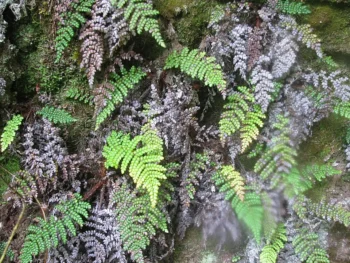
Forest Plume Fern: A Rare Hawaiian Native Worth Protecting
Meet the forest plume fern (Sadleria squarrosa), one of Hawaii’s most striking native ferns that’s quietly making a statement in tropical gardens. This elegant perennial fern brings a touch of authentic Hawaiian forest magic to your landscape, but there’s more to this beauty than meets the eye.
What Makes Forest Plume Fern Special?
The forest plume fern is a true Hawaiian endemic, meaning it grows naturally nowhere else on Earth except the Hawaiian Islands. This makes it a precious piece of Hawaii’s botanical heritage. With its broad, graceful fronds, this fern creates the lush, tropical understory feel that many gardeners dream of achieving.
You might also see this fern listed under its former scientific names, including Sadleria polystichoides or Sadleria unisora, but Sadleria squarrosa is the current accepted name.
Where Does It Grow?
This remarkable fern calls the Hawaiian Islands home, where it thrives in the wet forests that characterize much of the islands’ interior regions. It’s perfectly adapted to Hawaii’s unique climate and growing conditions.
- Species observed
- No observations
Important Conservation Note
Here’s something every gardener should know: the forest plume fern has a vulnerable conservation status. With only an estimated 21 to 100 populations remaining and between 3,000 to 10,000 individual plants in the wild, this species is considered at risk. This doesn’t mean you shouldn’t grow it – quite the opposite! Growing native Hawaiian plants like this fern helps preserve genetic diversity and supports conservation efforts.
The key is responsible sourcing. Only purchase forest plume ferns from reputable nurseries that propagate plants ethically rather than collecting from wild populations.
Growing Forest Plume Fern Successfully
If you’re lucky enough to live in USDA zones 10-12, you can create the perfect home for this tropical beauty:
Ideal Growing Conditions
- Light: Partial to full shade – think forest floor conditions
- Soil: Consistently moist, well-draining soil rich in organic matter
- Humidity: High humidity levels (60% or higher)
- Water: Regular watering to maintain soil moisture
Planting and Care Tips
- Plant in a protected location away from strong winds
- Apply organic mulch to retain moisture and suppress weeds
- Water regularly during dry periods, but ensure good drainage
- Remove old or damaged fronds to encourage new growth
- Fertilize sparingly with a balanced, slow-release fertilizer
Perfect Garden Companions
Forest plume fern shines in tropical and native Hawaiian garden designs. It’s particularly stunning when paired with other native Hawaiian plants or used as an understory planting beneath taller native trees. The fern’s graceful form makes it an excellent specimen plant or focal point in shaded garden areas.
A Note About Wetland Conditions
This fern has facultative wetland status, meaning it usually grows in wetland conditions but can adapt to drier sites. This flexibility makes it easier to incorporate into various garden settings, though it will always prefer consistent moisture.
Why Choose Forest Plume Fern?
By choosing to grow forest plume fern, you’re not just adding a beautiful plant to your garden – you’re participating in conservation. Native plants like this support local ecosystems and help preserve Hawaii’s unique botanical heritage for future generations.
While this fern doesn’t offer nectar for pollinators (ferns don’t flower), it contributes to the overall ecosystem health and provides habitat structure for various wildlife species.
Remember: if you’re interested in growing forest plume fern, always source your plants responsibly from nurseries that propagate rather than wild-collect. Together, we can enjoy these remarkable plants while ensuring their survival in the wild.