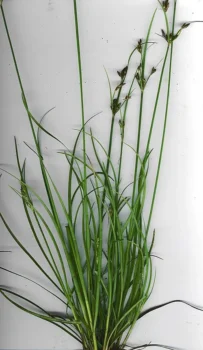
Forked Fimbry: A Native Sedge for Your Wetland Garden
If you’re looking to add authentic native character to your rain garden or wetland landscape, meet forked fimbry (Fimbristylis dichotoma) – a humble yet hardworking sedge that’s been quietly doing its job in American wetlands for centuries. While it may not win any flashy flower contests, this unassuming grass-like plant brings genuine ecological value and low-maintenance appeal to the right garden setting.
What is Forked Fimbry?
Forked fimbry is a native sedge that can grow as either an annual or perennial, depending on conditions. Like other members of the sedge family, it has that distinctive grass-like appearance but with triangular stems – a telltale sign you’re looking at a sedge rather than a true grass. Don’t be surprised if you see it listed under its scientific synonyms Fimbristylis diphylla or Scirpus dichotomus in older gardening references.
Where Does It Call Home?
This adaptable native has quite an impressive range! Forked fimbry naturally occurs throughout the southeastern United States, including Alabama, Florida, Georgia, Louisiana, Mississippi, North Carolina, South Carolina, Texas, and Virginia. But its native territory doesn’t stop there – you’ll also find it thriving in Hawaii, Puerto Rico, the U.S. Virgin Islands, and various Pacific islands including Guam and Palau.
- Species observed
- No observations
The Wetland Connection
Here’s where forked fimbry really shines – it’s a wetland specialist! Depending on your region, this plant ranges from being an obligate wetland species (almost always found in wet areas) to facultative wetland (usually wet, but occasionally tolerates drier spots). This makes it perfect for:
- Rain gardens and bioswales
- Pond edges and bog gardens
- Natural wetland restorations
- Areas with consistently moist soil
Growing Forked Fimbry Successfully
The beauty of working with native plants like forked fimbry is that they’re already adapted to local conditions. This sedge thrives in USDA hardiness zones 8-11, making it suitable for warmer climates and coastal areas.
Ideal Growing Conditions:
- Full sun to partial shade
- Consistently moist to wet soils
- Tolerates periodic flooding
- Adaptable to various soil types as long as moisture is adequate
Garden Design Role
While forked fimbry won’t be the star of your flower border, it excels as a supporting player in naturalistic landscapes. Use it as:
- Ground cover in wet areas where other plants struggle
- Part of a diverse native plant community
- Transition plantings between water features and upland areas
- Low-maintenance filler in rain gardens
Care and Maintenance
Once established, forked fimbry is refreshingly low-maintenance. Since it’s adapted to wetland conditions, your main job is ensuring adequate moisture. In suitable wet locations, it may self-seed and naturalize, creating informal colonies that look perfectly at home.
The plant produces small, inconspicuous brown flower clusters that are wind-pollinated, so don’t expect showy blooms or butterfly magnets. Instead, appreciate it for its ecological authenticity and practical problem-solving abilities.
Should You Plant Forked Fimbry?
Forked fimbry is an excellent choice if you:
- Have consistently wet or boggy areas in your landscape
- Want to create authentic native plant communities
- Are developing rain gardens or natural stormwater management
- Appreciate low-maintenance, regionally appropriate plants
- Live within its natural range (zones 8-11)
However, skip this one if you’re looking for showy flowers, have dry garden conditions, or live in colder climates where it won’t be hardy.
The Bottom Line
Forked fimbry may not be the most glamorous plant in the native gardening world, but it’s exactly the kind of ecological workhorse that makes natural landscapes function properly. If you have the right wet conditions and appreciate plants that know their place in the ecosystem, this humble sedge could be a perfect fit for your sustainable garden goals.