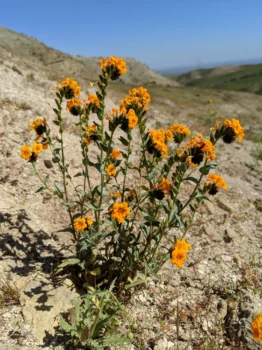
Forked Green Fiddleneck: A California Native Worth Growing
If you’re looking to add authentic California charm to your garden while supporting local wildlife, forked green fiddleneck (Amsinckia vernicosa var. furcata) might just be the unsung hero your landscape needs. This delightful annual wildflower brings both ecological value and rustic beauty to native plant gardens across the Golden State.
What Is Forked Green Fiddleneck?
Forked green fiddleneck is a California native annual forb that belongs to the borage family. As an herbaceous plant without woody stems, it completes its entire life cycle in one growing season. You might also encounter it under its synonym, Amsinckia furcata, in older gardening references.
The plant gets its whimsical fiddleneck name from its distinctive flower clusters that curl like the scroll of a violin. The forked part of the name refers to the branching pattern of these coiled flower arrangements, which botanists call scorpioid cymes.
Where Does It Grow Naturally?
This charming wildflower is endemic to California, meaning it naturally occurs nowhere else in the world. You’ll find it scattered across various habitats throughout the state, from coastal areas to inland valleys.
- Species observed
- No observations
Why Consider Growing Forked Green Fiddleneck?
There are several compelling reasons to welcome this native into your garden:
- Pollinator magnet: The small blue to purple flowers are beloved by bees and other native pollinators
- Low maintenance: Once established, it requires minimal care and water
- Authentic California character: Adds genuine native plant diversity to your landscape
- Self-sustaining: As an annual, it readily self-seeds for next year’s display
- Conservation value: Supporting native species helps preserve California’s botanical heritage
Garden Design and Landscape Role
Forked green fiddleneck shines in naturalized settings and wildflower meadows. It’s perfect for:
- Native plant gardens
- Restoration projects
- Pollinator gardens
- Low-water landscapes
- Informal, cottage-style plantings
The plant’s somewhat rough, hairy texture and modest flowers make it a supporting player rather than a showstopper, but that’s exactly what makes it valuable in creating authentic native plant communities.
Growing Conditions and Care
Like many California natives, forked green fiddleneck appreciates conditions that mimic its natural habitat:
- Sunlight: Full sun exposure
- Soil: Well-draining soils; adapts to various soil types
- Water: Drought tolerant once established; minimal summer water needed
- Climate: Thrives in USDA hardiness zones 8-10
Planting and Propagation Tips
Growing forked green fiddleneck is refreshingly straightforward:
- Timing: Direct seed in fall for spring germination
- Planting: Scatter seeds on prepared soil surface and lightly rake in
- Spacing: Allow natural spacing through broadcast seeding
- Watering: Provide occasional water during establishment, then reduce
- Maintenance: Minimal care required; allow plants to complete their cycle and drop seeds
Important Conservation Note
Forked green fiddleneck has a conservation status that indicates it may be of some concern in certain areas. When adding this plant to your garden, always source seeds from reputable native plant nurseries or seed companies that practice responsible collection methods. Never collect seeds from wild populations, especially in areas where the plant might be uncommon.
Wildlife Benefits
Beyond its pollinator appeal, forked green fiddleneck contributes to the broader ecosystem by providing habitat and food sources for various beneficial insects. The seeds may also provide food for small birds and other wildlife.
The Bottom Line
Forked green fiddleneck may not win any beauty contests, but it earns its place in California gardens through sheer usefulness and authenticity. If you’re committed to creating habitat for native wildlife and preserving California’s unique botanical legacy, this humble annual deserves consideration. Just remember to source your seeds responsibly and let this little native work its quiet magic in your landscape.