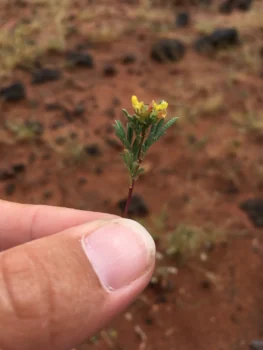
Fort Bowie Prairie Clover: A Desert Gem for Water-Wise Gardens
If you’re looking for a charming native wildflower that thrives in tough conditions and asks for almost nothing in return, let me introduce you to Fort Bowie prairie clover (Dalea brachystachya). This delightful little forb might not be the showiest plant in your garden, but it’s got personality in spades and some serious drought-busting superpowers.
What Is Fort Bowie Prairie Clover?
Fort Bowie prairie clover is a native annual or biennial forb—that’s garden-speak for a soft-stemmed, non-woody plant that completes its life cycle in one or two years. You might also see it listed under its old name, Dalea lemmonii, but don’t let the name confusion fool you. This is the same tough little desert dweller that’s been quietly beautifying the American Southwest for centuries.
As a member of the pea family, this prairie clover produces small but striking purple-pink flower spikes that rise above silvery-green, finely textured foliage. The whole plant typically stays compact and low-growing, making it perfect for filling in gaps or creating naturalized drifts in desert landscapes.
Where Does It Call Home?
This native beauty has claimed territory across Arizona, New Mexico, Texas, and interestingly enough, Maryland. It’s particularly well-suited to the Sonoran and Chihuahuan desert regions, where it has evolved to handle intense heat, minimal rainfall, and rocky soils that would make other plants throw in the towel.
- Species observed
- No observations
Why You Might Want to Plant It
Fort Bowie prairie clover is like that reliable friend who never asks for much but always shows up when you need them. Here’s why this plant deserves a spot in your garden:
- Drought champion: Once established, it can survive on rainfall alone in most of its native range
- Pollinator magnet: Those small flowers are beloved by native bees, butterflies, and other beneficial insects
- Low maintenance: Plant it and pretty much forget about it—this is not a high-drama plant
- Self-seeding: As an annual or biennial, it’ll drop seeds for next year’s show
- Native support: You’re supporting local ecosystems and wildlife by choosing native species
Perfect Garden Situations
Fort Bowie prairie clover shines in:
- Xeriscaped or desert-style gardens
- Native plant gardens and wildflower meadows
- Rock gardens with well-draining soil
- Pollinator gardens focused on native species
- Low-water landscape designs
- Areas where you want seasonal color without ongoing maintenance
Growing Conditions and Care
This plant is refreshingly straightforward to grow, especially if you’re gardening in USDA hardiness zones 8-10. Here’s what Fort Bowie prairie clover needs to thrive:
Sunlight: Full sun is essential—at least 6-8 hours of direct sunlight daily
Soil: Well-draining soil is non-negotiable. Sandy, rocky, or gravelly soils are perfect. Heavy clay or waterlogged conditions will likely kill it.
Water: Minimal once established. Water regularly during germination and early growth, then back off dramatically.
Temperature: Heat tolerant and adapted to desert conditions, but may not survive hard freezes in colder zones
Planting and Care Tips
Getting Fort Bowie prairie clover started is easier than you might think:
- Timing: Direct seed in fall for spring germination, or plant in early spring after the last frost
- Seed prep: Some gardeners lightly scarify seeds or give them a brief cold treatment, but it’s often unnecessary
- Planting depth: Plant seeds about 1/4 inch deep
- Spacing: Scatter seeds naturally for a wildflower effect, or space about 6-12 inches apart
- Watering: Keep soil lightly moist until germination, then reduce watering frequency significantly
- Fertilizing: Skip it—this plant prefers lean soils and too much nutrition can actually harm it
A Few Things to Keep in Mind
While Fort Bowie prairie clover is generally easy-going, there are a couple of considerations:
As an annual or biennial, don’t expect it to be a permanent landscape feature. However, if you let it set seed, you’ll likely see it return in subsequent years. The plant’s compact size means it works best in masses or drifts rather than as individual specimens.
Also, while it attracts beneficial pollinators, specific information about its appeal to wildlife like birds isn’t well-documented, so don’t count on it as a major wildlife food source.
The Bottom Line
Fort Bowie prairie clover might not be the flashiest plant in the native garden catalog, but it’s a solid performer that delivers consistent results with minimal fuss. If you’re gardening in its native range and looking for drought-tolerant plants that support local pollinators while adding subtle beauty to your landscape, this little prairie clover could be exactly what you need.
It’s particularly valuable for gardeners who want to reduce their water usage without sacrificing color and ecological function. Plus, there’s something deeply satisfying about growing a plant that’s perfectly adapted to your local conditions—it’s like welcoming a piece of your region’s natural heritage into your own backyard.