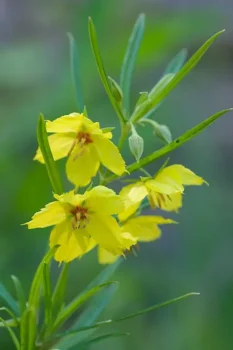
Fourflower Yellow Loosestrife: A Bright Native for Wet Gardens
If you’ve been searching for a cheerful native perennial that absolutely loves wet feet, let me introduce you to fourflower yellow loosestrife (Lysimachia quadriflora). This delightful North American native brings sunny yellow blooms to the moistest corners of your landscape, turning problem wet spots into garden gold.
What Is Fourflower Yellow Loosestrife?
Fourflower yellow loosestrife is a native perennial forb that belongs to the primrose family. As a forb, it’s an herbaceous flowering plant without woody stems – think of it as nature’s way of adding color to wetlands without the commitment of a shrub. This moisture-loving plant has earned its place in native gardens across much of North America.
You might also encounter this plant listed under its synonyms Lysimachia longifolia or Steironema quadriflorum in older gardening references, but they’re all the same wonderful species.
Where Does It Naturally Grow?
This native beauty calls both Canada and the United States home, with a impressive range that spans from Manitoba and Ontario down through the eastern and central states. You’ll find it naturally growing in Alabama, Arkansas, District of Columbia, Georgia, Illinois, Indiana, Iowa, Kentucky, Maryland, Massachusetts, Michigan, Minnesota, Missouri, New York, North Carolina, North Dakota, Ohio, Oklahoma, Pennsylvania, South Dakota, Virginia, West Virginia, and Wisconsin.
- Species observed
- No observations
Why Your Garden Will Love This Plant
Here’s where fourflower yellow loosestrife really shines – it’s practically tailor-made for those challenging wet areas where other plants fear to tread. Its wetland status varies by region, but the message is clear: this plant thrives in moisture. In many regions, it’s classified as an obligate wetland plant, meaning it almost always occurs in wetlands.
The aesthetic appeal is undeniable. Picture clusters of bright yellow flowers dancing above lance-shaped green leaves from summer into early fall. The plant typically reaches 1-3 feet tall, creating a lovely backdrop for shorter wetland companions or standing proudly as a mid-height accent.
Perfect Garden Roles
This versatile native excels in several landscape situations:
- Rain gardens where it can handle periodic flooding
- Pond or stream margins for natural-looking water features
- Bog gardens and wetland restoration projects
- Native plant gardens focused on local flora
- Naturalized areas where you want low-maintenance color
Growing Conditions and Care
The secret to success with fourflower yellow loosestrife is simple: keep it wet! This plant thrives in consistently moist to wet soils and can handle everything from full sun to partial shade. It’s remarkably adaptable within its moisture requirements, tolerating seasonal flooding that would kill many other perennials.
Hardy in USDA zones 3-8, this tough native can handle cold winters and warm summers across a broad geographic range. Once established, it requires minimal maintenance – just the kind of plant busy gardeners appreciate.
Planting and Care Tips
Getting started with fourflower yellow loosestrife is refreshingly straightforward:
- Plant in spring after the last frost date
- Choose the wettest, most challenging spot in your garden
- Ensure consistent moisture – this is non-negotiable
- Space plants 12-18 inches apart to allow for natural spreading
- Minimal fertilization needed in rich, organic wetland soils
- Be aware that established plants may spread by underground rhizomes
Wildlife and Pollinator Benefits
Those cheerful yellow blooms aren’t just pretty to look at – they’re pollinator magnets! Bees, butterflies, and other beneficial insects flock to the flowers throughout the blooming season. By choosing this native over exotic alternatives, you’re providing food sources that local wildlife have evolved alongside for thousands of years.
The Bottom Line
If you have a wet spot in your landscape that’s been giving you headaches, fourflower yellow loosestrife might just be your solution. This resilient native offers beautiful yellow blooms, supports local pollinators, and actually prefers the conditions that challenge so many other garden plants. It’s proof that sometimes the best approach is working with nature rather than against it.
For gardeners committed to native plants and sustainable landscaping, fourflower yellow loosestrife represents everything we love about indigenous flora: beauty, resilience, and ecological value all wrapped up in one sunny package.