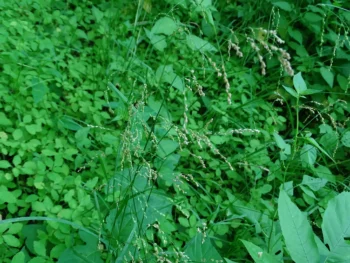
Fowl Mannagrass: The Unsung Hero of Wetland Gardens
If you’ve been searching for a native grass that thrives in those perpetually soggy spots in your yard, meet fowl mannagrass (Glyceria striata). This humble yet hardy perennial grass might not win any beauty contests, but it’s exactly what your rain garden, pond edge, or bioswale has been waiting for.
What Makes Fowl Mannagrass Special?
Fowl mannagrass is a true North American native, naturally occurring from Alaska all the way down through most of the continental United States and throughout Canada. This extensive range tells you everything you need to know about its adaptability – this is one tough little grass that knows how to handle whatever Mother Nature throws at it.
This perennial grass grows in loose, rhizomatous clumps and typically reaches about 5-6 feet tall at maturity. Don’t expect flashy flowers though – fowl mannagrass produces small, greenish blooms in early summer that are more functional than beautiful. The real appeal lies in its fine-textured, green foliage that adds a naturalistic touch to wet areas where many other plants would simply give up.
Where Does Fowl Mannagrass Grow?
You’ll find this adaptable grass growing naturally across an impressive range of states and provinces, from Alberta and British Columbia down to Florida and Texas, and everywhere in between. It’s truly a continental species that has made itself at home in wetlands from coast to coast.
- Species observed
- No observations
The Perfect Wetland Workhorse
Here’s where fowl mannagrass really shines – it’s classified as an obligate wetland plant in most regions, meaning it almost always occurs in wetlands. This makes it absolutely perfect for:
- Rain gardens and bioswales
- Pond margins and stream banks
- Wetland restoration projects
- Soggy areas where other plants struggle
- Natural water filtration systems
If you have that one spot in your yard that never seems to dry out, fowl mannagrass could be your solution rather than your problem.
Growing Conditions That Make It Happy
Fowl mannagrass is refreshingly straightforward about what it wants:
- Moisture: Consistently wet to moist soil – this grass has low drought tolerance
- Soil: Adapts to medium and fine-textured soils, with a pH range from 4.0 to 8.0
- Light: Surprisingly shade tolerant, making it useful under trees near water features
- Temperature: Extremely cold hardy (down to -35°F), suitable for zones 2-9
- Anaerobic conditions: High tolerance, so it won’t mind if its roots sit in waterlogged soil
Planting and Care Tips
The good news? Fowl mannagrass is pretty low-maintenance once you get it established:
- Propagation: Most commonly propagated by sprigs rather than seed
- Planting density: Space plants for 3,500-7,800 plants per acre if doing large-scale planting
- Growth rate: Moderate growth rate with slow vegetative spread
- Maintenance: Very little required – just ensure consistent moisture
- Frost-free days: Needs at least 100 frost-free days minimum
The active growing period is spring, and you can expect the foliage to have moderate porosity in summer, becoming more porous in winter as the grass goes dormant.
Wildlife and Ecological Benefits
While fowl mannagrass may not be a pollinator magnet (it’s wind-pollinated like most grasses), it serves important ecological functions. The seeds, which ripen from spring through fall, provide food for waterfowl and other birds – hence the fowl in its common name. It also contributes to erosion control along waterways and helps filter runoff in bioretention systems.
Is Fowl Mannagrass Right for Your Garden?
Consider fowl mannagrass if you:
- Have consistently wet or boggy areas in your landscape
- Are creating a rain garden or bioswale
- Want to restore or create wetland habitat
- Need erosion control near water features
- Prefer native plants that support local ecosystems
Skip it if you:
- Have dry, well-drained soil conditions
- Want a showy, ornamental grass for visual impact
- Need a grass for high-traffic areas (it has low fire and trampling tolerance)
The Bottom Line
Fowl mannagrass won’t be the star of your garden, but it might just be the hardworking supporting actor that makes everything else possible. In the right wet conditions, this native grass provides reliable, low-maintenance ground cover while supporting local wildlife and helping manage water runoff. Sometimes the most valuable plants are the ones that quietly do their job without asking for applause – and fowl mannagrass definitely fits that description.