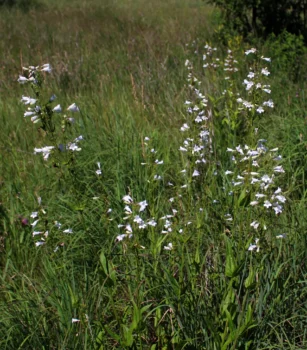
Foxglove Beardtongue: A Native Charmer for Your Garden
Looking for a native perennial that combines striking beauty with practically zero fuss? Meet foxglove beardtongue (Penstemon digitalis), a delightful North American native that’s been quietly winning over gardeners with its graceful flower spikes and laid-back growing style. Also known as talus slope penstemon, this versatile plant might just be the missing piece in your garden puzzle.
What Makes Foxglove Beardtongue Special?
Foxglove beardtongue is a herbaceous perennial that belongs to the forb family – basically, it’s a non-woody plant that comes back year after year. Standing tall at up to 4 feet, this beauty produces elegant spikes of tubular flowers that range from white to pale purple, creating a stunning vertical accent in any garden setting.
The plant gets its beardtongue moniker from the fuzzy stamen that peeks out of each flower – a charming little detail that pollinators absolutely adore. With a moderate growth rate and rhizomatous growing pattern, it spreads gently to form nice colonies without becoming aggressive.
Where Does It Call Home?
This adaptable native has quite an impressive range across North America. In the United States, you’ll find foxglove beardtongue growing naturally from Maine down to Georgia and as far west as Texas and South Dakota. It’s also established itself in several Canadian provinces including Ontario, Quebec, New Brunswick, and Nova Scotia, though it’s considered non-native there.
- Species observed
- No observations
Why Gardeners Love (and Should Consider) This Plant
There are plenty of reasons to fall for foxglove beardtongue:
- Pollinator magnet: Bees, butterflies, and hummingbirds can’t resist those tubular flowers
- Drought champion: Once established, it shrugs off dry spells with impressive resilience
- Low maintenance: This isn’t a plant that demands constant attention
- Versatile placement: Happy in both wetlands and drier sites
- Extended bloom time: Flowers from late spring into summer
- Self-sufficient: Self-seeds readily for natural garden expansion
Perfect Garden Roles
Foxglove beardtongue shines in several garden styles:
- Native plant gardens: A natural choice for authentic regional plantings
- Prairie and meadow gardens: Provides excellent vertical structure
- Pollinator gardens: A reliable nectar source throughout the growing season
- Rain gardens: Tolerates both wet and dry conditions beautifully
- Cottage gardens: Adds an informal, naturalized charm
- Border backgrounds: Perfect height for back-of-border placement
Growing Conditions Made Simple
One of the best things about foxglove beardtongue is how adaptable it is. This plant is truly the easy going friend of the garden world:
- USDA Hardiness Zones: 3-8 (can handle temperatures down to -38°F!)
- Soil: Thrives in coarse, medium, or fine textured soils
- pH preference: 5.5 to 7.0 (slightly acidic to neutral)
- Sun requirements: Full sun to partial shade
- Water needs: Low once established, though it can handle wet conditions too
- Fertility: Medium fertility requirements – not demanding
Planting and Care Tips
Getting started with foxglove beardtongue is refreshingly straightforward:
Planting
- Plant in spring or fall when temperatures are moderate
- Space plants 18-24 inches apart (roughly 2,700-4,800 plants per acre for large installations)
- Seeds can be direct sown – no cold stratification needed
- Container plants are routinely available from native plant nurseries
Care
- Water regularly the first year to establish deep roots
- After that, supplemental watering is rarely needed
- Deadhead spent flowers to encourage continued blooming
- Leave some seed heads for natural reseeding and wildlife
- Cut back to ground level in late fall or early spring
- Divide clumps every 3-4 years if desired, though it’s not necessary
Special Considerations
For gardeners in Canada, it’s worth noting that while foxglove beardtongue isn’t native to your region, it’s not considered invasive either. It naturalizes well and provides excellent pollinator benefits. However, you might also consider exploring native Canadian alternatives like Penstemon hirsutus (hairy beardtongue) for a truly local option.
The plant’s wetland status varies by region – it’s equally happy in average garden soil or slightly wetter conditions, making it incredibly versatile for different garden situations.
The Bottom Line
Foxglove beardtongue is one of those wonderful plants that gives you maximum reward for minimal effort. Whether you’re creating a pollinator paradise, establishing a native plant garden, or just want something beautiful and reliable, this charming perennial delivers on all fronts. With its graceful flower spikes, tough-as-nails constitution, and wildlife appeal, it’s a plant that truly earns its place in the garden.
Plus, there’s something deeply satisfying about growing a plant that’s been thriving in North American landscapes for centuries – you’re not just gardening, you’re participating in a beautiful, long-standing natural tradition.