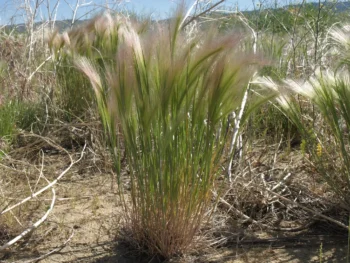
Foxtail Barley: A Graceful Native Grass with a Wild Side
If you’ve ever walked through a prairie or vacant lot and noticed delicate, shimmering grass heads that dance in the breeze like nature’s own sparklers, you’ve likely encountered foxtail barley (Hordeum jubatum jubatum). This charismatic native grass brings both beauty and a touch of wildness to gardens, though it comes with some personality quirks that are worth knowing about before you invite it into your landscape.
What is Foxtail Barley?
Foxtail barley is a perennial grass that’s as American as apple pie—native to an impressively large swath of North America. This hardy grass belongs to the same family as wheat and other cereal grains, but it’s decidedly more ornamental than agricultural. Also known by the scientific synonym Critesion jubatum, this grass is part of the graminoid group, which includes grasses, sedges, and rushes.
Where Does Foxtail Barley Call Home?
Talk about a well-traveled plant! Foxtail barley is native to an extensive range that includes Alaska, Canada (from British Columbia to Newfoundland), and most of the lower 48 states. You can find this adaptable grass thriving everywhere from Arizona’s deserts to Maine’s coastlines, and from California’s valleys to the prairies of the Midwest. It even grows in St. Pierre and Miquelon, making it one of North America’s most widespread native grasses.
- Species observed
- No observations
The Beauty and the Beast of Foxtail Barley
Foxtail barley is genuinely stunning when its signature seed heads emerge. These bottlebrush-like plumes feature long, silky bristles (called awns) that catch the light and create an almost ethereal shimmer as they sway in the breeze. The graceful, arching growth habit adds texture and movement to any landscape, making it a favorite for naturalistic garden designs.
However, there’s a catch—and it’s worth mentioning upfront. While beautiful when young and fresh, foxtail barley can become somewhat scraggly as the season progresses. More importantly, those gorgeous seed heads can be problematic for pets and livestock, as the sharp awns can get caught in fur, eyes, and ears, potentially causing irritation or injury.
Growing Conditions and Care
One of foxtail barley’s greatest strengths is its adaptability. This tough-as-nails grass thrives in USDA hardiness zones 2 through 9, making it suitable for gardens across most of North America. Here’s what it needs to flourish:
- Sunlight: Prefers full sun but tolerates partial shade
- Soil: Extremely adaptable to various soil types, including poor, sandy, or clay soils
- Water: Drought tolerant once established, though it appreciates occasional watering during dry spells
- pH: Tolerates alkaline conditions and salt, making it excellent for coastal gardens
- Maintenance: Low maintenance once established
Planting and Propagation
Foxtail barley is refreshingly easy to grow from seed, which can be direct-sown in spring or fall. Simply scatter the seeds over prepared soil and barely cover them—they need light to germinate. Keep the soil consistently moist until seedlings establish, which typically takes 2-3 weeks.
Fair warning: this grass has a enthusiastic approach to reproduction and may self-seed more aggressively than you’d like. If you’re looking for a well-behaved garden citizen, you might want to deadhead the flowers before they set seed, though this means sacrificing those lovely plumes.
Role in Garden Design
Foxtail barley shines in naturalized landscapes, prairie gardens, and wildflower meadows where its free-spirited nature is an asset rather than a liability. It’s also excellent for:
- Erosion control on slopes
- Rain gardens and bioswales
- Drought-tolerant landscapes
- Coastal gardens where salt tolerance is crucial
- Wildlife gardens focused on providing seed for birds
Wildlife and Ecological Benefits
While foxtail barley is wind-pollinated and doesn’t directly benefit pollinators like bees and butterflies, it provides valuable ecosystem services. The seeds are an important food source for various bird species, and the grass provides nesting material and shelter for small wildlife. As a native species, it supports the broader web of life that has evolved alongside it over thousands of years.
Should You Plant Foxtail Barley?
The answer depends on your garden goals and tolerance for a plant with strong opinions about where it wants to grow. If you’re creating a naturalized landscape, establishing a prairie garden, or need a tough grass for challenging conditions, foxtail barley could be perfect. Its native status means you’ll be supporting local ecosystems while adding genuine beauty to your space.
However, if you prefer tidy, controlled garden beds or have pets that spend time in the garden, you might want to think twice or at least plant it in areas where those beautiful but potentially problematic seed heads won’t be an issue.
Like many native plants, foxtail barley teaches us that true beauty often comes with a bit of wildness—and that’s not necessarily a bad thing. Sometimes the most rewarding plants are those that remind us we’re gardening in partnership with nature, not trying to control it completely.