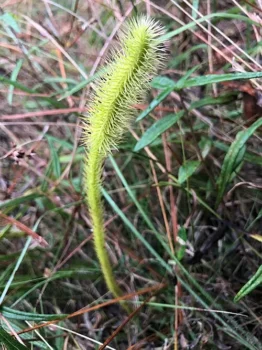
Foxtail Clubmoss: A Prehistoric Wonder for Your Wetland Garden
Ever wondered what your garden might have looked like 400 million years ago? Meet foxtail clubmoss (Lycopodiella alopecuroides), a living fossil that’s been around since long before dinosaurs roamed the Earth. This fascinating primitive plant brings an ancient touch to modern wetland gardens, though it’s definitely not your typical garden center find!
What Exactly Is Foxtail Clubmoss?
Despite its name, foxtail clubmoss isn’t actually a moss at all. It’s a lycopod – one of the world’s most primitive vascular plants. Think of it as a botanical time capsule that reproduces using spores instead of seeds or flowers. This perennial forms low-growing mats of tiny, scale-like leaves that hug the ground, sending up distinctive brush-like fertile stems that look remarkably like miniature fox tails.
Scientifically known as Lycopodiella alopecuroides, this little survivor has quite a few aliases from its long taxonomic history, including Lycopodium alopecuroides and Lepidotis alopecuroides, among others.
Where Does It Call Home?
Foxtail clubmoss is proudly native to the United States, specifically the lower 48 states. You can find this moisture-loving plant naturally occurring across twenty states, primarily in the eastern and southeastern regions: Alabama, Arkansas, Connecticut, Delaware, Florida, Georgia, Louisiana, Maine, Maryland, Massachusetts, Mississippi, New Jersey, New York, North Carolina, Pennsylvania, Rhode Island, South Carolina, Tennessee, Texas, and Virginia.
- Species observed
- No observations
A Wetland Specialist
Here’s where things get interesting – foxtail clubmoss is quite particular about its living conditions. This plant is classified differently depending on the region:
- Atlantic and Gulf Coastal Plain: Obligate Wetland (almost always found in wetlands)
- Eastern Mountains and Piedmont: Facultative Wetland (usually in wetlands, but sometimes elsewhere)
- Great Plains: Obligate Wetland (wetlands almost exclusively)
- Northcentral & Northeast: Facultative Wetland (wetland preference but some flexibility)
Translation? This little plant loves having wet feet and thrives in consistently moist to boggy conditions.
Is Foxtail Clubmoss Right for Your Garden?
Let’s be honest – foxtail clubmoss isn’t for everyone or every garden. It’s a specialized plant that requires specific conditions to thrive. Here’s what you need to know:
Perfect for: Bog gardens, rain gardens, wetland restoration projects, or native plant enthusiasts looking to add something truly unique to their collection. It works wonderfully as a ground cover in consistently moist, acidic conditions.
Not ideal for: Traditional perennial borders, dry gardens, or anywhere that doesn’t maintain consistent moisture. This isn’t a plant you can just pop into any old garden bed.
How to Identify Foxtail Clubmoss
Spotting foxtail clubmoss is actually pretty straightforward once you know what to look for:
- Low-growing, creeping mats of tiny, overlapping scale-like leaves
- Distinctive upright, brush-like fertile stems that really do resemble fox tails
- Found in wet, acidic soils in partial shade to full sun
- No flowers – remember, this ancient plant reproduces via spores!
Growing Conditions and Care
If you’re brave enough to try growing this prehistoric beauty, here’s what it needs:
- Moisture: Consistently wet to moist, acidic soil (think bog-like conditions)
- Light: Partial shade to full sun, depending on moisture availability
- Hardiness: USDA zones 6-10
- Soil: Acidic, organic-rich, and always moist
Fair warning: this isn’t an easy plant to establish or maintain outside of its preferred conditions. It’s definitely more of a specialty plant for dedicated native plant gardeners.
The Bottom Line
Foxtail clubmoss offers something no other garden plant can – a genuine connection to Earth’s ancient botanical past. While it won’t provide nectar for pollinators or flashy blooms for your Instagram feed, it brings an irreplaceable sense of natural history and ecological authenticity to the right garden setting.
If you have the right wet, acidic conditions and want to grow something truly unique, foxtail clubmoss could be your ticket to a prehistoric garden adventure. Just remember – this living fossil has very specific needs, and success requires commitment to creating and maintaining its preferred wetland habitat.